Pompierre Beach
Pompierre Beach
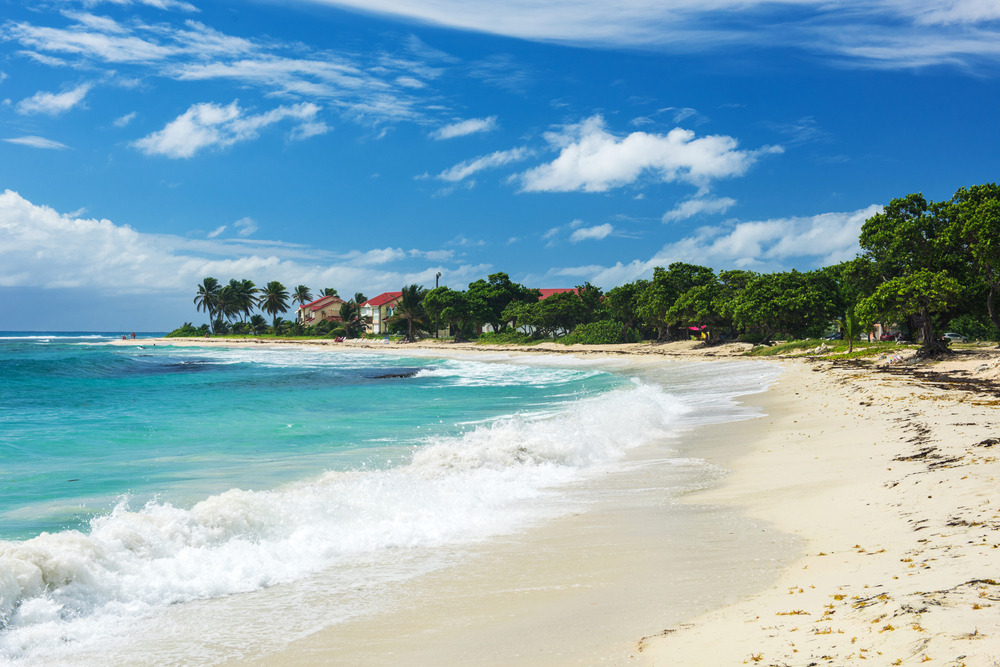
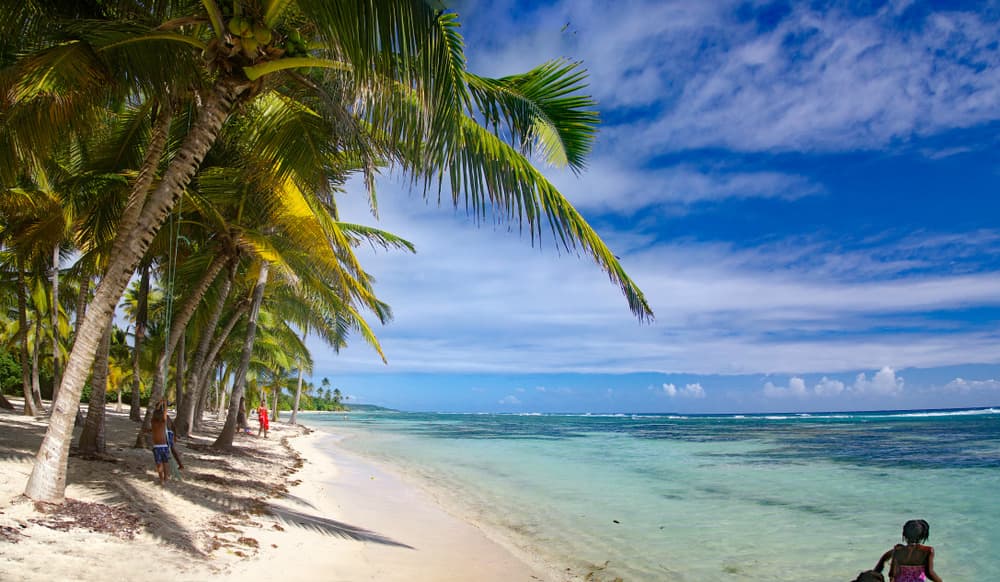
On the island of Terre-de-Haut, Pompierre Beach unfolds in an arc-shaped bay sheltered from the wind, ideal for family swimming in Les Saintes.
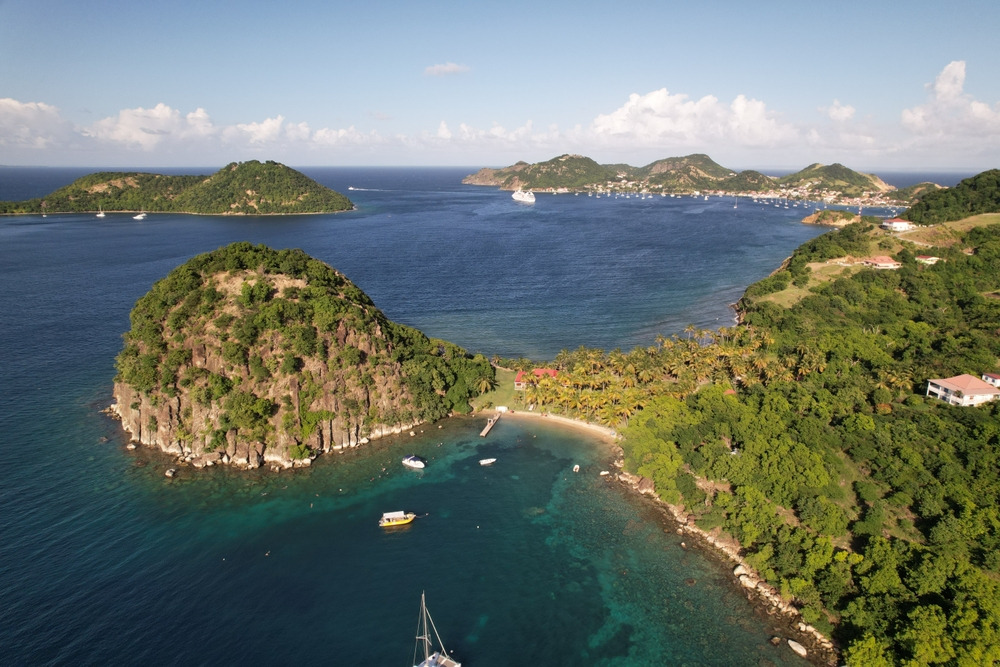
On the island of Terre-de-Haut, in the Les Saintes archipelago, Pompierre Beach offers an arc-shaped bay sheltered from the wind, framed by two mornes and lined with coconut palms. Its natural configuration, absence of development, and immediate proximity to the village make it one of the most frequented beaches in Les Saintes for family swimming.
Why visit Pompierre Beach
Pompierre stands out from other beaches on Terre-de-Haut thanks to its enclosed bay. The îlet of Roches Percées, positioned at the entrance of the cove, breaks the swell and creates calm, shallow waters extending dozens of meters. This setup is ideal for families with children and less experienced swimmers, where other coves in Les Saintes remain exposed to Atlantic winds.
Another advantage lies in the atmosphere. No boisterous beach bars or deckchair rentals: you come with your picnic, settle under the trees, and share the space with local wildlife. Iguanas from the Lesser Antilles occasionally cross the sand before disappearing into the scrub, and goats lie down near beach towels without ever getting too close.
What to see and do
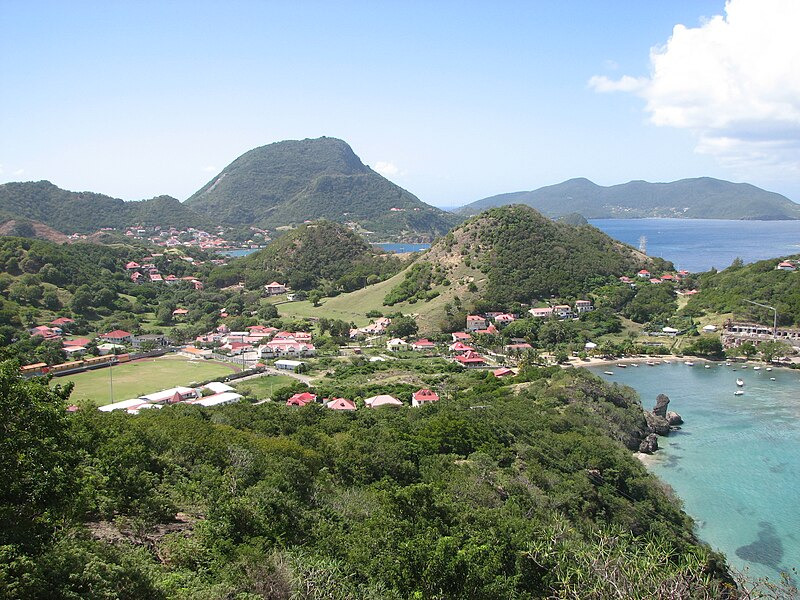
The beach curves along the northeast of Terre-de-Haut, framed by Morne Morel to the west and Morne Rouge to the east. At the entrance, near the village, wooden tables and shelters installed beneath the trees allow you to picnic in the shade, feet in the sand.
Main activities
- Swimming: clear water, sandy bottom, progressive depth, bay protected by the îlet of Roches Percées.
- Light snorkeling: visibility remains good near rocks along the cove edge, though not as rich as the nearby Pain de Sucre.
- Picnicking: shelters and tables freely available under sea almonds and coconut palms.
- Wildlife watching: iguanas, goats, hermit crabs, and seabirds frequent the beach and its surroundings.
- Walk to Roches Percées: a short trail runs along the beach to a viewpoint overlooking the rocky îlet that closes the bay.
Practical information
The beach is free and open to the public with no official closing hours. A few points to consider before you go:
- Shade: coconut palms and sea almonds cover the back of the beach, but prime shade spots are claimed early in high season.
- Services: no equipment rentals, no showers, limited facilities. Bring water, snacks, and sunscreen from the village.
- Safety: swimming is generally safe thanks to the enclosed bay, but no lifeguard station is present. Supervise young children and stay alert to sea conditions in case of heavy swell.
- Wildlife: do not feed iguanas or goats, and do not leave food unattended.
- Coconut palms: avoid setting up directly beneath ripe coconuts.
When to go
Les Saintes can be visited year-round thanks to a stable tropical climate. The dry season, from December to April, offers the best swimming conditions and calmest waters. The wet season, from June to November, brings brief showers but remains enjoyable, with fewer crowds on the beach.
Crowds peak around midday, when excursionists arriving from boats from Trois-Rivières or Pointe-à-Pitre head to the beach. Favor early morning or late afternoon for peace and quiet. Pompierre is also very busy on Sundays with residents of Terre-de-Haut.
How to get there
Pompierre is reached in about ten minutes on foot from the town of Terre-de-Haut. Follow the street heading northeast from the village, marked by signs. The path crosses a small residential area and opens directly onto the back of the beach.
To reach Terre-de-Haut, allow approximately 20 minutes by ferry from Trois-Rivières and 1 hour from Pointe-à-Pitre. Once there, renting a bike, scooter, or golf cart allows you to combine Pompierre with other island beaches in a single day.
Nearby attractions
Terre-de-Haut contains several sites accessible as half-day outings:
- Pain de Sucre: distinctive volcanic peak above a small beach renowned for snorkeling.
- Petite Anse Beach: wilder cove, opposite the town.
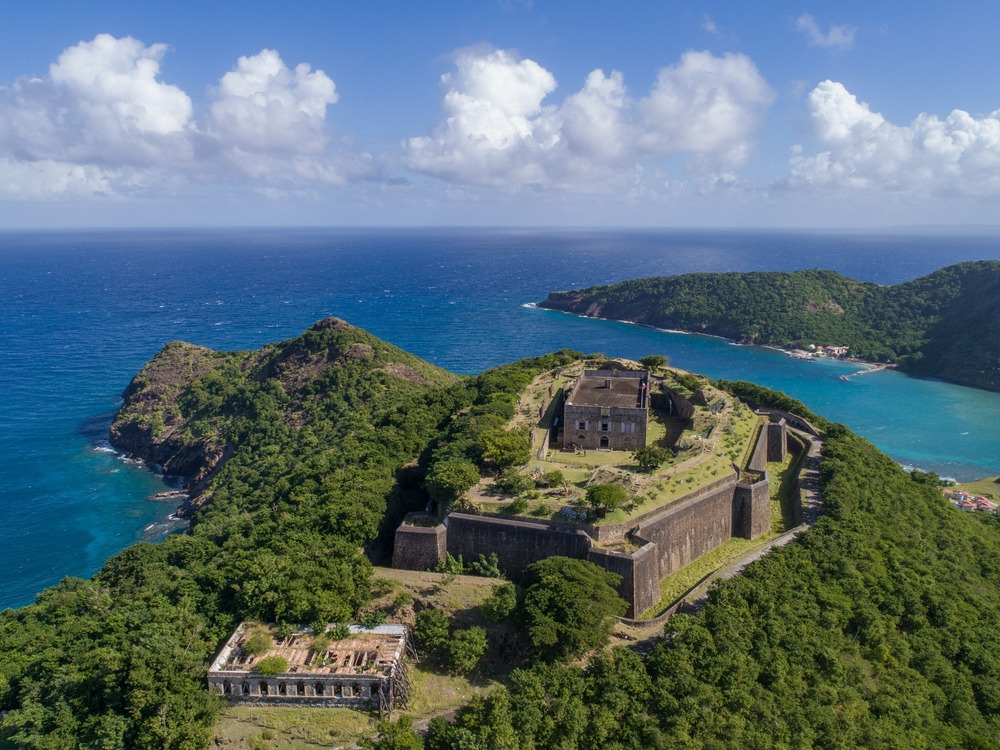
- Fort Napoléon, perched on the heights, houses a museum and exotic garden offering an overview of the bay.
For a broader view of the archipelago, you can also venture toward Basse-Terre and its Mémorial ACTe in Pointe-à-Pitre.
Frequently asked questions
Frequently asked questions
Yes. The bay is protected by an îlet, the water is calm, and the depth increases gradually. Tree shade in the back of the beach also allows you to keep the youngest out of direct sun.
No. Pompierre has remained undeveloped, with no restaurants or equipment rentals. You will find shops, snack bars, and restaurants in the town of Terre-de-Haut, a 10-minute walk away.
Yes, Lesser Antillean iguanas live in the scrub around the beach and regularly cross the sand. Observe them from a distance and do not feed them.
No, access to the beach and shelters is free.
Allow a half-day to enjoy swimming and a picnic under the trees. A full day is possible if you combine it with a walk to Roches Percées.
Planning your trip
Pompierre fits naturally into a circuit in Les Saintes, a classic stop on a Guadeloupe stay. To build your itinerary between Grande-Terre, Basse-Terre, and the southern islands, consult our Guadeloupe trips.
Nearby
Interested in this visit?
We can include it in your personalised itinerary.