Mémorial ACTe
Mémorial ACTe
Located in Pointe-à-Pitre, Mémorial ACTe is one of the world's leading sites of remembrance dedicated to the slave trade, open since 2015.
The Mémorial ACTe, or Caribbean Centre for Expression and Memory of the Trade in Enslaved People and Slavery (CACEM/ACTe), is a museum and memorial site located in Pointe-à-Pitre, on the former grounds of the Darboussier sugar refinery. Open to the public since July 2015, it traces the history of slavery from antiquity to the present day and stands as one of the world's foremost sites of remembrance dedicated to the transatlantic slave trade.
Why Visit Mémorial ACTe
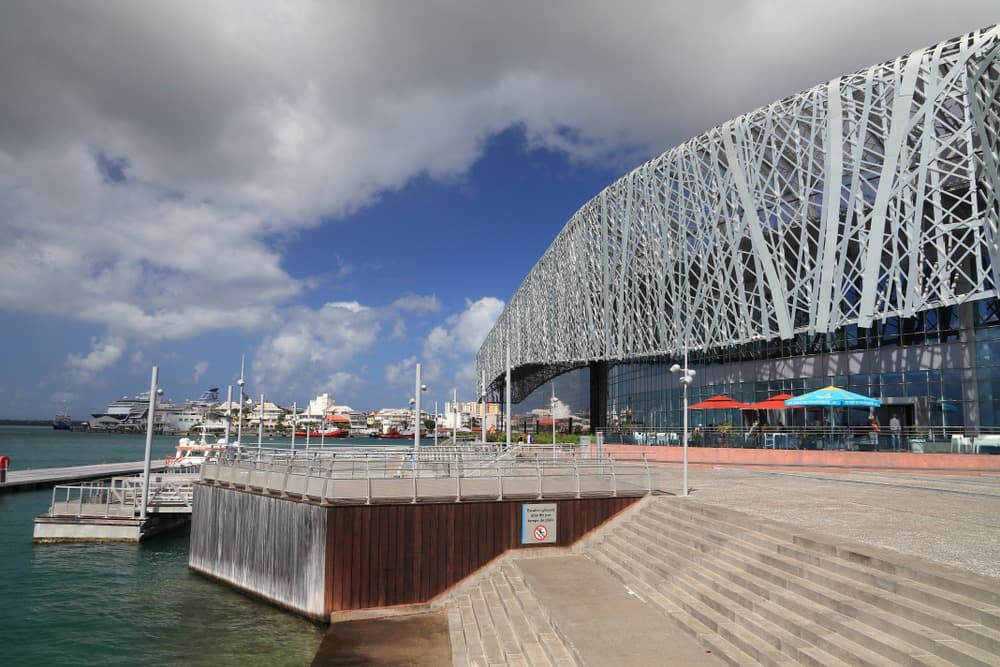
Three compelling reasons make a visit particularly meaningful. First, the scope of its narrative: the permanent exhibition unfolds across 6 archipelagos comprising 39 thematic islands, covering ancient slavery, the Atlantic trade, abolitions, and contemporary forms of servitude. Second, the site's international recognition: during its inauguration in July 2015, Reverend Jesse Jackson hailed it as "the most complete and accomplished place in the world" dedicated to this subject. Third, its architecture, designed by a team of Guadeloupe-based architects and comparable, through its mineral façade, to the MuCEM in Marseille.
Mémorial ACTe appeals equally to travelers seeking a deeper understanding of Caribbean history and those drawn to contemporary architecture. Plan for 2 to 3 hours to explore the permanent exhibition.
History and Design of the Site
The building was designed by Guadeloupe architects Jean-Michel Mocka, Pascal Berthelot, Mikaël Marton, and Fabien Doré, and constructed by more than 300 Guadeloupe-based workers. It spans a total of 7,800 m² across 1.2 hectares, organized around three distinct areas: knowledge (permanent exhibition), exchange and dissemination (conference rooms, events, performing arts), and reflection, featuring the Morne Mémoire garden.
The architectural concept rests on a powerful image: silver roots resting upon a black box. The roots, referencing the cursed fig tree that thrives while enveloping ruins to protect them, evoke the millions of souls lost, clinging to collective memory. Pascal Berthelot describes this structure as "a mesh that protects a jewel," while opening toward the future. The façade is mineral in nature—a lattice of silver-colored steel covering black granite studded with quartz fragments, a tribute to the victims of the slave trade and slavery.
A monumental footbridge measuring 11.5 meters high and 275 meters long connects the main building to Morne Mémoire, a hillside transformed into a panoramic garden overlooking Pointe-à-Pitre bay.
What to See at Mémorial ACTe
The Permanent Exhibition
The heart of any visit, the permanent exhibition presents its narrative across 6 archipelagos and 39 thematic islands. The journey begins with slavery in ancient societies, traces the slave trade from Africa to the Americas, documents life on Caribbean plantations, then addresses 19th-century abolitions and contemporary forms of servitude. Objects, digital panels, audiovisual projections, and an audio guide accompany the self-guided experience.
The Tree of Life Space
This dedicated area for genealogical research houses between 6,000 and 8,000 family trees of Guadeloupe families. It enables descendants of deported populations to trace their lineage—a task historically made difficult by administrative practices linked to slavery.
Temporary Exhibitions and Morne Mémoire
Temporary exhibitions complement the programming, typically featuring artists or cultural events connected to Caribbean memory (additional fee). Outside, the footbridge leads to the Morne Mémoire garden, a space for reflection with panoramic views over the harbor.
Onsite Services
- Two restaurants, including one offering fine dining showcasing Guadeloupe cuisine
- A gift shop and bookstore with thematic publications
- An auditorium and flexible conference space for events and performing arts
- An outdoor terrace for open-air events
Practical Information
- Hours: Open Tuesday through Sunday, closed Mondays. Daytime hours with extended evenings on Friday and Saturday. Check updated hours on the official website before your visit.
- Admission: Moderate entrance fee for the permanent exhibition, additional charge for temporary exhibitions. Reduced rates for students, school groups, and organized tours; free admission for young children.
- Duration: Allow 2 to 3 hours for the permanent exhibition; longer if you include the footbridge and Morne Mémoire.
- Accessibility: The building is accessible to visitors with reduced mobility (elevators, ramps).
- Languages: Audio guide available in several languages including French, English, and Spanish.
How to Get There
Mémorial ACTe sits on the waterfront of Pointe-à-Pitre, in the Darboussier district, immediately near the marina and city center.
- From Pôle Caraïbes Airport (Pointe-à-Pitre): Approximately 15 minutes by car or taxi.
- From Pointe-à-Pitre city center: 10 to 15 minutes on foot from Place de la Victoire.
- By car: Parking available on-site. Limited street parking in surrounding areas.
- By bus: Several urban transit lines serve the district.
Nearby Attractions
Mémorial ACTe lends itself well to a day combining history and nature in Basse-Terre:
- Climbing La Grande Soufrière, an active volcano reaching 1,467 meters, approximately 1.5 hours away.
- Grande Anse Beach, a long stretch of golden sand on the leeward coast.
- Maison de la Kassaverie in Capesterre-Belle-Eau, dedicated to traditional cassava production.
- The Saintes archipelago, with an excursion to Îlet à Cabrit.
Frequently Asked Questions
Frequently asked questions
Plan for 2 to 3 hours to explore the permanent exhibition with the audio guide. Add 30 to 60 minutes if you cross the footbridge to Morne Mémoire or visit a temporary exhibition.
The exhibition addresses sensitive subjects (violence, deportation) and is best suited for children aged 10–12 and older, with adult accompaniment. Educational materials are available for school groups.
Yes. An audio guide is available in multiple languages, including French, English, and Spanish. It is included with admission or offered for a supplementary fee depending on the period.
Yes, the site features two restaurants, including one offering fine dining that showcases Guadeloupe cuisine, plus a gift shop.
Yes. Mémorial ACTe was designed with accessibility in mind: elevators, ramps, and adapted pathways allow visitors to explore all spaces, including the footbridge to Morne Mémoire.
Plan Your Visit
Mémorial ACTe is an essential stop for understanding Guadeloupe's history and identity. To incorporate it into a comprehensive itinerary spanning Grande-Terre, Basse-Terre, and neighboring islands, explore our Guadeloupe travel suggestions.
Nearby

Interested in this visit?
We can include it in your personalised itinerary.