Cousteau Reserve, a Meeting Place
Cousteau Reserve, a Meeting Place
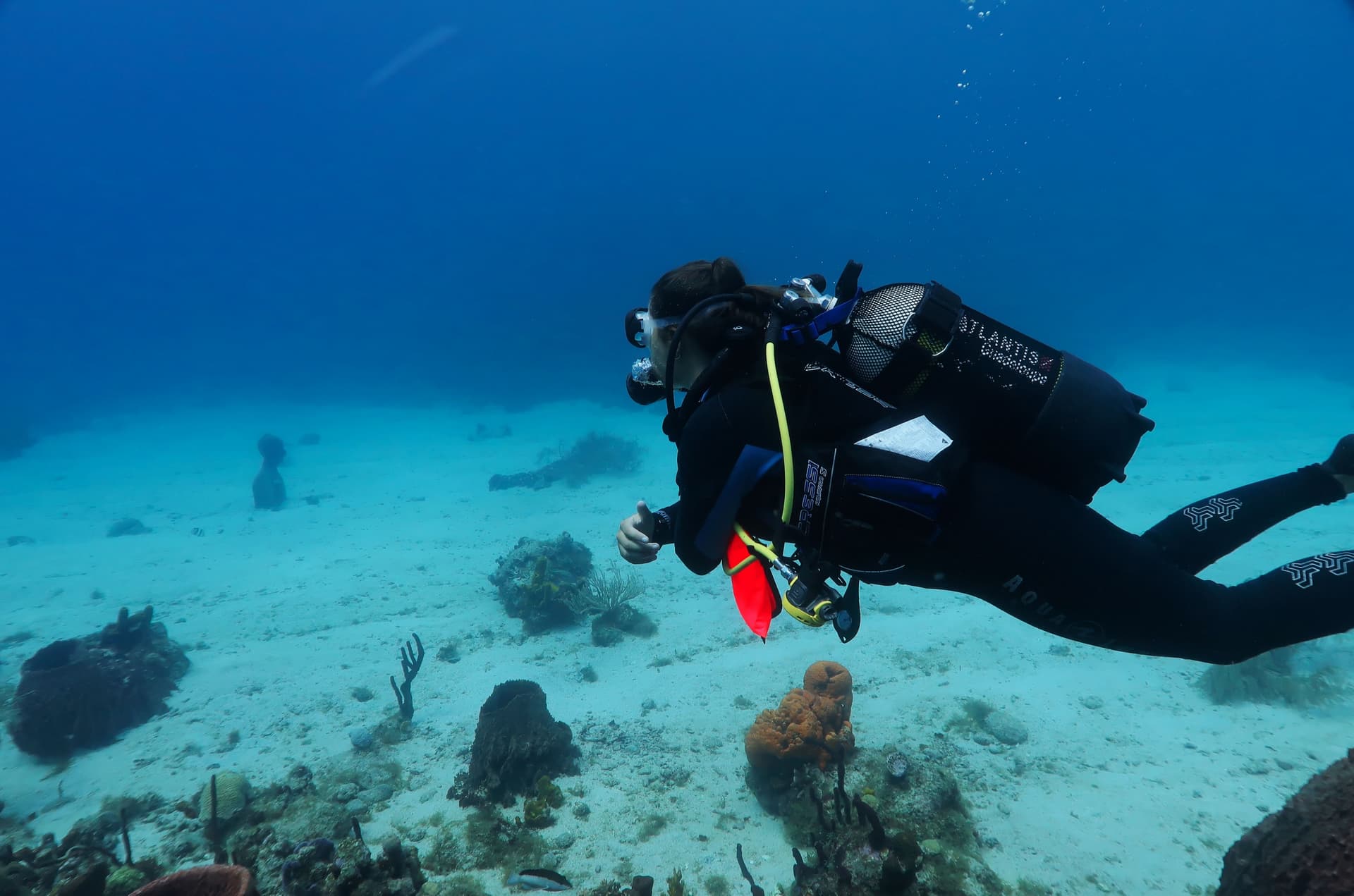
Facing Malendure, the Cousteau Reserve protects the Pigeon Islets and 1,000 hectares of seabed: diving, snorkeling, wrecks and an immersed bust of the Commander.
Facing Malendure beach, on the leeward coast of Basse-Terre, the Cousteau Reserve protects a maritime space of 1,000 hectares organized around the Pigeon Islets. Located in the municipalities of Bouillante and Pointe-Noire, it is one of Guadeloupe's premier diving sites, boasting extensive coral heritage, several accessible wrecks, and an immersed bust of Commander Cousteau.
Why Visit the Cousteau Reserve
The reserve brings together three assets rarely found in such a compact area: living coral reef, accessible depths at shallow levels (3 to 20 m across most sites) and historical heritage tied to the early dives of Cousteau's team. The site suits both a simple snorkeling outing and technical wreck diving.
Access is from Malendure beach, where diving clubs and boat operators are concentrated. Visitor numbers are high year-round, which means well-organized operations but also notable crowds during peak season.
History of the Reserve
Discovery of the site dates back to late 1959. Commander Cousteau's team, aboard the Calypso, carried out the 9th dive test for trials of the bathyscaphe SP-350 "Denise". A battery short circuit forced the crew to dive on the Pigeon Islets area, where the richness of the seabed was immediately recognized. Cousteau later advocated for protecting the site, which took his name.
In 1998, sculptor Albert Fage created a bronze bust of Jacques-Yves Cousteau, topped with the famous red knit cap. With Cousteau having passed away in 1997, Bouillante's town hall decided in January 2004 to immerse this bust at approximately 12 m depth, on the Coral Garden site. It has become one of the area's iconic reference points for divers.
What to See Underwater
The Three Main Mooring Sites
The reserve has three marked, easy-to-access sites:
- The Coral Garden: descent starting at 3 m below the boat, Cousteau bust around 12 m, schools of Platax around 20 m. Brain coral, staghorn coral, elkhorn coral.
- The Swimming Pool: clear, luminous sandy-coral floor. You'll encounter trumpetfish, Spanish mackerel, seahorses.
- The Aquarium: reef rich in cavities, home to spiny lobsters, spider crabs and moray eels.
The Wrecks
Several wrecks round out the offerings, better suited for experienced divers:
- The Gustavia, a coastal trader from the Lacascade-Michaux shipping company, rests at approximately 39 m depth. Its sinking is attributed to Hurricane Hugo (to be verified locally, Hugo having struck in 1989).
- The Franjack, a former dredger repurposed as a dive site.
- The Augustin Fresnel II, a vessel also accessible to supervised divers.
Fauna and Flora
The coral massif combines gorgonians, sponges and Neptune brain corals. On the fauna side, sea turtles, spiny lobsters, moray eels and seahorses are regularly observed. With a bit of luck, stingrays and sleeping sharks appear on the calmest sites.
Other Nearby Diving Spots
Beyond the Pigeon Islets, several spots extend the zone: Machette, Champagne near Bouillante and Le Mambo on the Mahaut side. They offer varied underwater relief and are typically scheduled by local clubs according to sea conditions.
Practical Information
Departures are from Malendure. Several options coexist:
- Tank diving: supervised by beach clubs, from beginner to advanced levels. Deep wrecks require a minimum level 2 certification.
- Snorkeling and fin swimming: accessible without experience, from the beach or via shuttle to the islets.
- Glass-bottom boat: approximately 1h15 outing, with waterslide and free swimming, suited for families.
- Sea kayak: to reach the islets independently in calm seas.
The Malendure Tourism Office provides information on operators and daily conditions. Plan a morning for a standard dive outing, a half-day for a double dive with wreck.
When to Visit
Diving is practiced year-round in the reserve, sheltered from the prevailing wind by the leeward coast. The dry season, from December to April, offers the best visibility and generally calm seas. The wet season (June to November) remains practicable but can be disrupted by rainy episodes and occasionally by late-summer hurricane season. The period between French school holidays offers the best compromise between conditions and crowds.
How to Get There
Access is via the Malendure road, in the municipality of Bouillante (Basse-Terre). From Pointe-à-Pitre, allow approximately 1 hour via the N1 then the D23 (Traversée Road) or the west coast. A large parking area overlooks the beach, from which you can walk to the pontoons of diving clubs and glass-bottom boats.
Nearby
The leeward coast has several complementary sites: Malendure Point and the Japanese Garden for snorkeling, Mahaut Point near Pointe-Noire and Lézarde Point on the Bouillante side, both appreciated for their nearshore reefs. To vary the scenery, you can continue to Pointe des Châteaux on the east of Grande-Terre, or to the more intimate beaches of the Saintes like Pompierre beach. For industrial heritage, the Factory Mill offers an interesting historical counterpoint.
Frequently Asked Questions
Frequently asked questions
No. While tank diving remains the flagship activity, snorkeling from the Pigeon Islets already provides access to the reef from 1 to 3 m depth. Glass-bottom boat trips also allow you to discover the seabed without getting in the water.
The bust is immersed at approximately 12 m depth, so out of reach with simple snorkeling. It is accessible by tank diving (level 1 sufficient) or for experienced freediving practitioners.
The Gustavia, at approximately 39 m, requires a minimum level 2 certification. The Franjack and Augustin Fresnel II are more accessible and can be offered to level 1 divers depending on actual depth profiles.
Yes. The glass-bottom boat trip, approximately 1h15, includes a waterslide and free swimming. Snorkeling from Malendure beach is also feasible with children comfortable in the water.
During peak season (December to April, school holidays), it is advisable to reserve your dive or boat trip one to two days in advance with Malendure clubs.
Prepare Your Stay
The Cousteau Reserve combines easily with a broader discovery of Basse-Terre, the National Park and neighboring islands. To build a custom itinerary, consult our trips to Guadeloupe.
Nearby
Interested in this visit?
We can include it in your personalised itinerary.