Les Saintes
South of Basse-Terre, Les Saintes form a small archipelago of breathtaking beauty, considered one of the Caribbean's finest jewels. Composed of 9 volcanic islets with only 2 inhabited, this destination captivates with its authenticity, spectacular landscapes and peaceful atmosphere.
South of Basse-Terre, Les Saintes form a small archipelago of breathtaking beauty, considered one of the Caribbean's finest jewels. Composed of 9 volcanic islets with only 2 inhabited, this destination captivates with its authenticity, spectacular landscapes and peaceful atmosphere. Between dreamy beaches, colonial heritage and charming island life, Les Saintes offer an unforgettable escape, far from the tourist fray.
Where are Les Saintes located?
Situated approximately 15 km south of Guadeloupe, the Les Saintes archipelago extends between Marie-Galante to the west and Dominica to the south, in the heart of the Lesser Antilles. It is separated from Basse-Terre by the Saintes Channel.
Climate
Les Saintes benefit from a pleasant tropical climate, sunny year-round, with temperatures ranging between 25°C and 30°C, rarely exceeding 33°C. This climate is tempered by the trade winds, which bring constant breezes and refreshing sea air.
Two seasons shape the year:
- The dry season (December to April) offers hot, dry weather ideal for sailing, swimming and hiking. Trade winds are regular and rainfall rare.
- The wet season (May to November), warmer and wetter, corresponds to the rainy season. Showers are brief, often in late afternoon, and nature becomes more verdant. A cyclone risk exists between August and October, but the islands remain peaceful and less crowded.
Characteristics of the Les Saintes archipelago
Les Saintes comprise 9 volcanic islands, of which 2 are inhabited:
- Terre-de-Haut, the most lively
- Terre-de-Bas, wilder and more preserved.
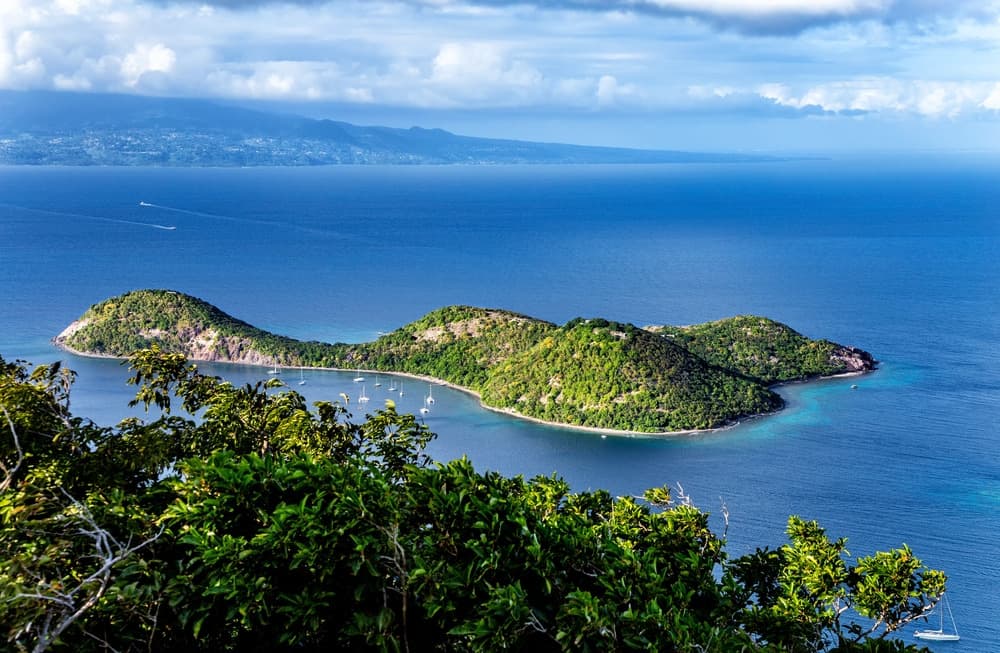
The 7 other islets (Îlet à Cabrit, Grand-Îlet, La Coche, Les Augustins, La Redonde, Le Pâté and Roches Percées) offer an exceptional natural setting, prized by sailors and divers.
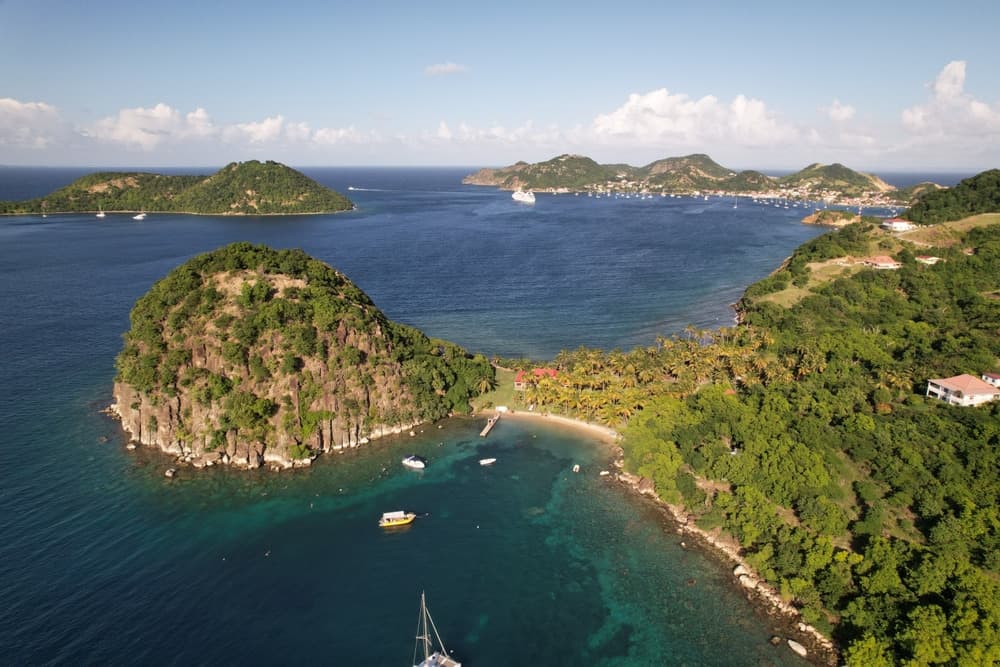
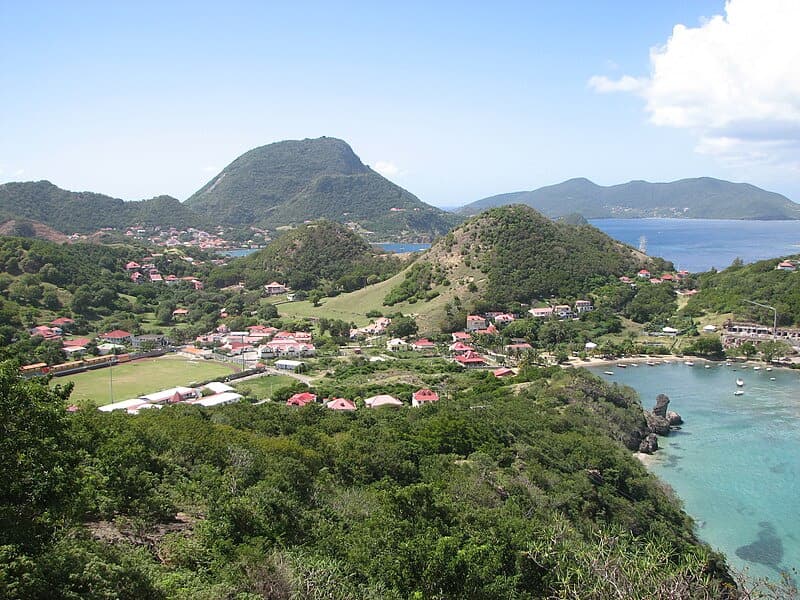
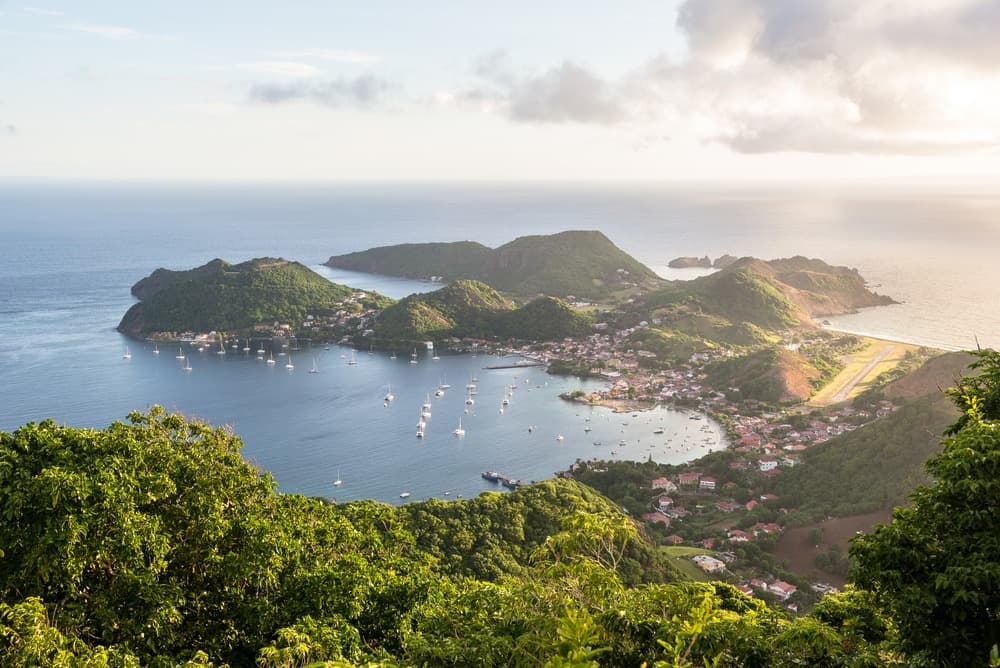
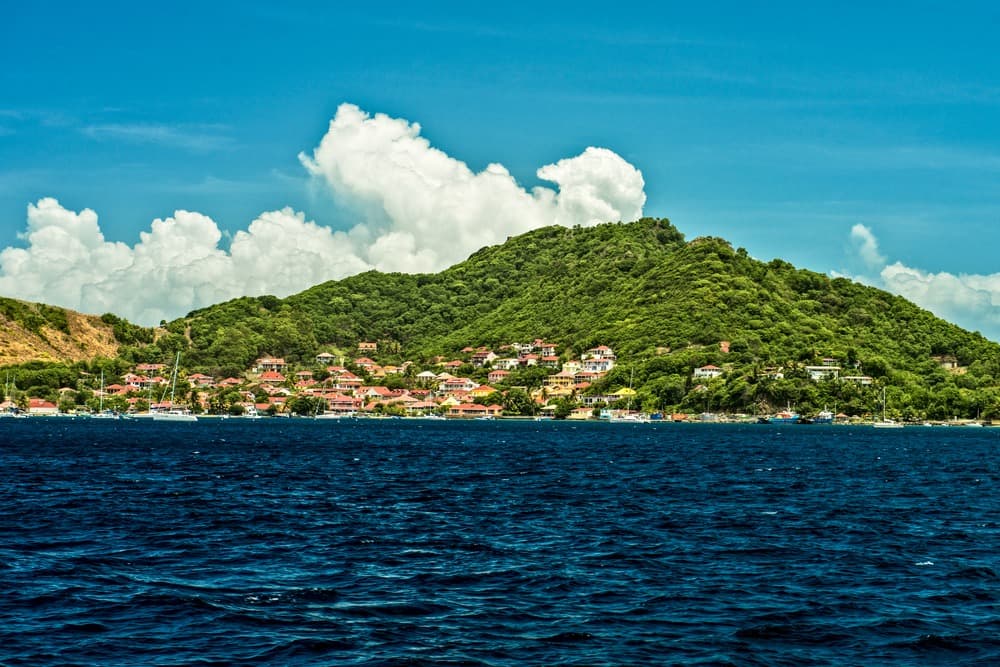
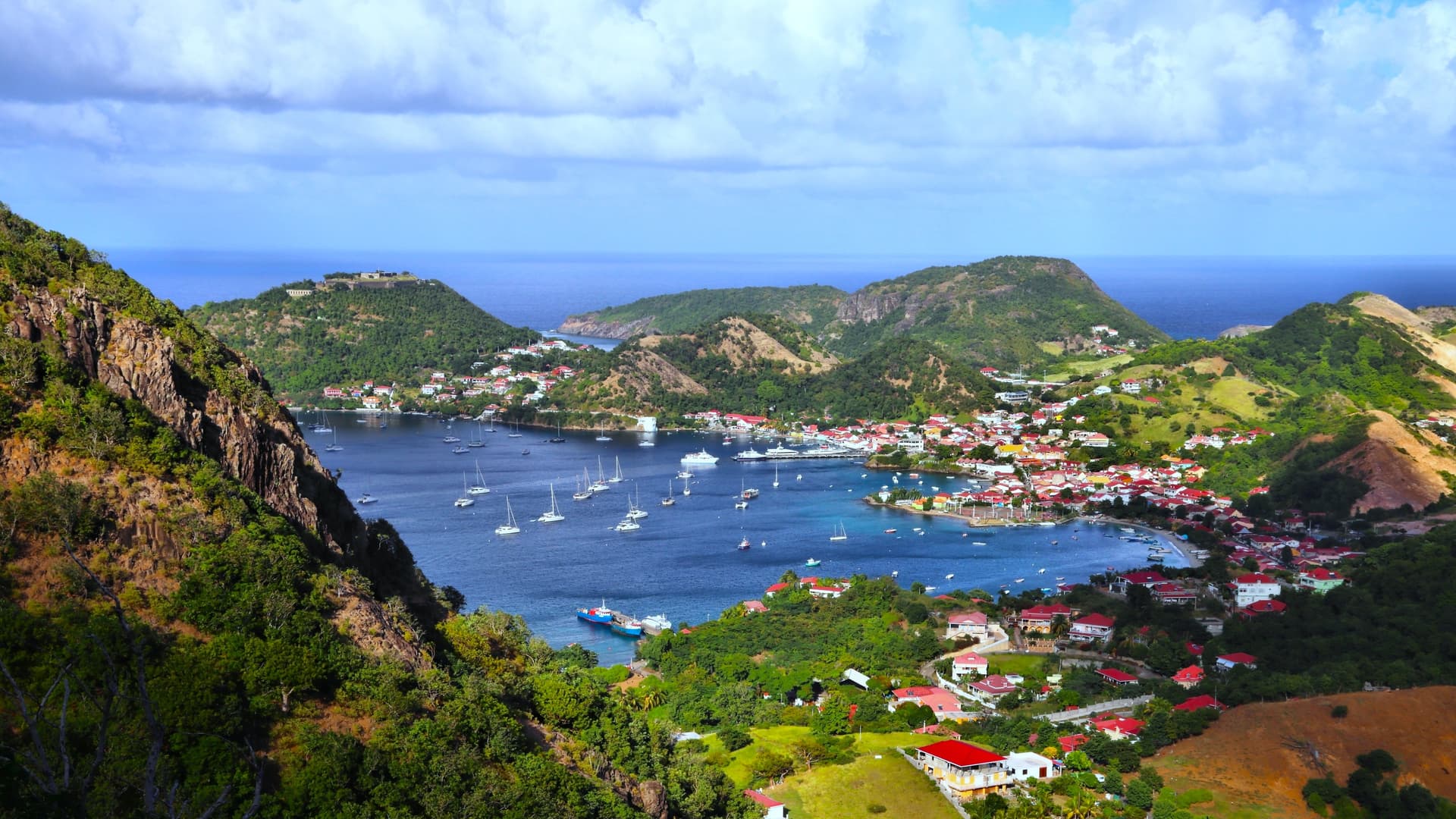
Terre-de-Haut, with its bay ranked among the world's most beautiful, captivates with its red-roofed houses, flower-lined alleyways and peaceful atmosphere. You get around on foot, by scooter, bicycle or small vehicle, and life animates by day before returning to tranquility in the evening, among fishermen and sunsets.
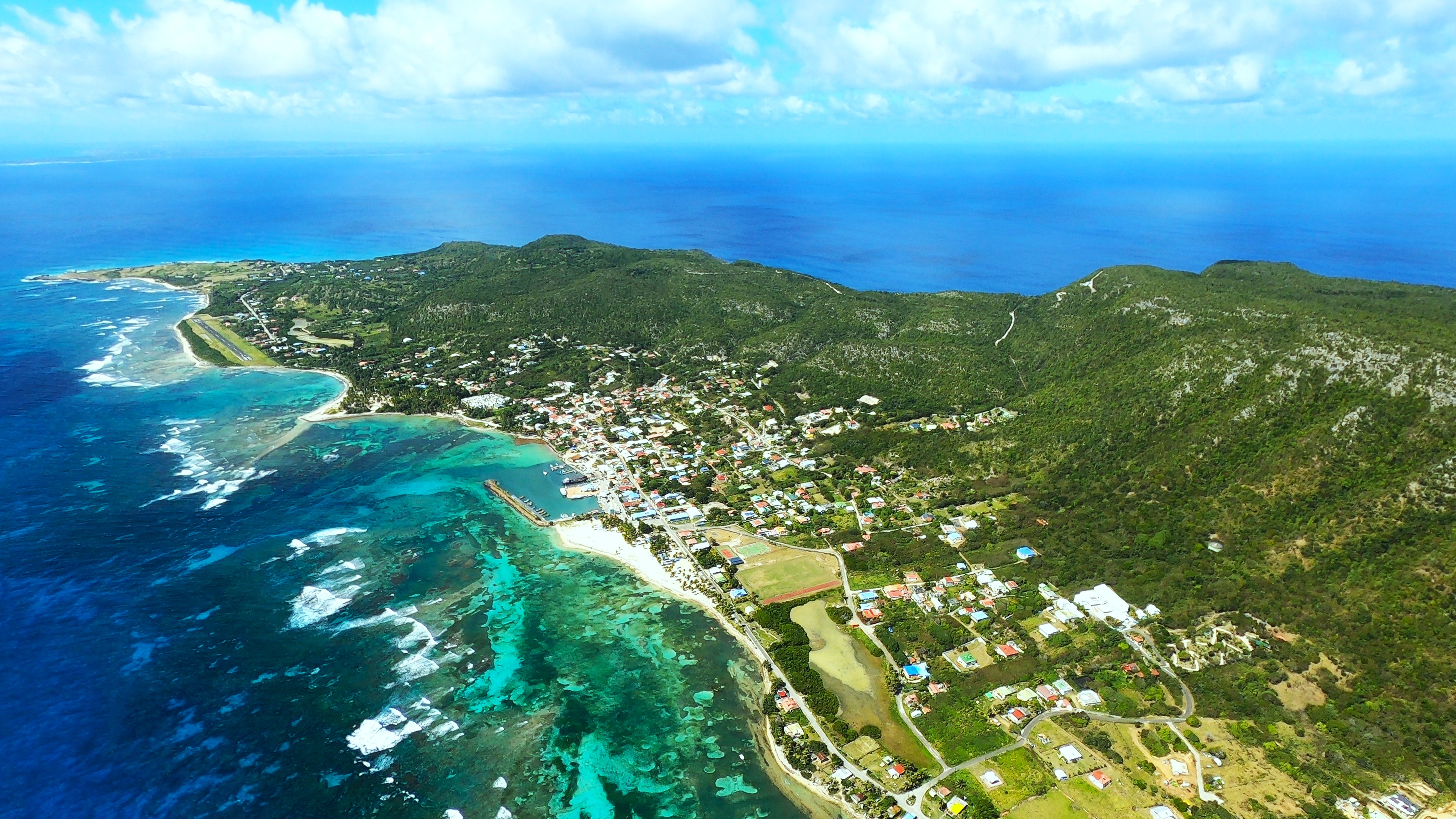
Across the water, Terre-de-Bas charms with its unspoiled nature, steep trails, quiet beaches and warm welcome. Surrounded by wild islets, it embodies an authentic Guadeloupe, rhythmed by the sea, Creole traditions and joie de vivre.
History
Before the arrival of Europeans, the Saintes islands, then called Caaroucaëra, served as hunting and fishing grounds for the Arawaks, and later the Caribs from Guadeloupe and Dominica. Lacking fresh water sources, they were not permanently inhabited. On November 4, 1493, Christopher Columbus discovers the archipelago during his second voyage and names it "Los Santos" in honor of All Saints' Day. Deemed economically worthless, the islands are quickly abandoned by the Spanish.
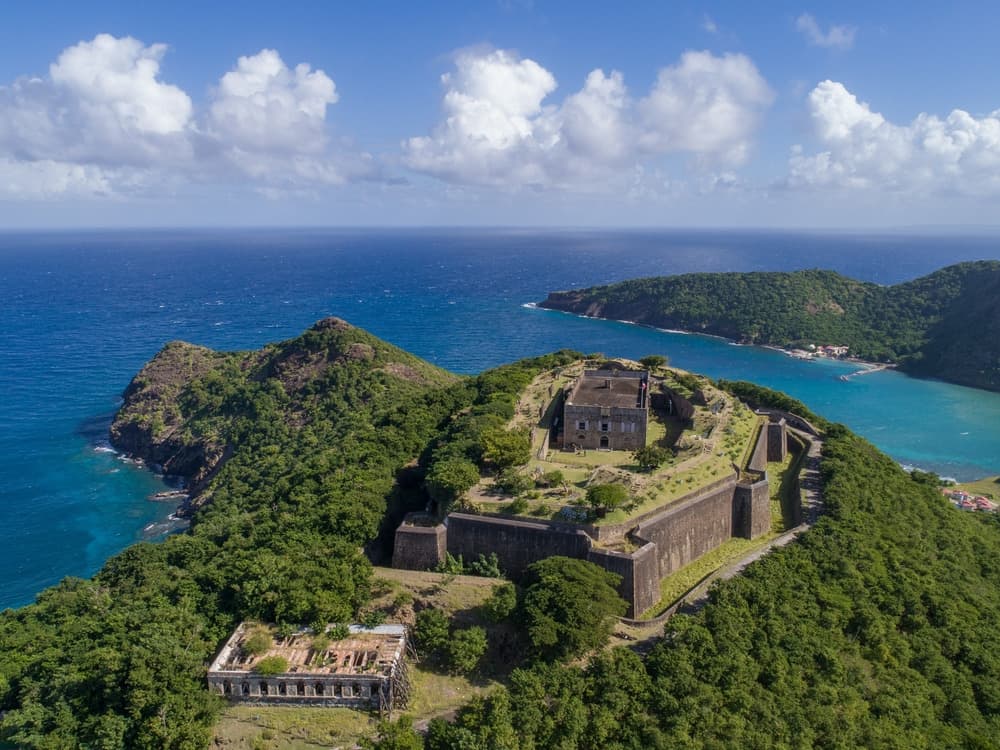
In 1648, the French annex the Saintes under Governor Charles Houël. Agricultural attempts fail, but the archipelago becomes a strategic point in the struggle for Caribbean control. The French and English clash there repeatedly, leaving a lasting mark on local history. To defend its positions, France builds Fort Napoléon at Terre-de-Haut and Fort Joséphine on Îlet à Cabrit.
On April 12, 1782, the Battle of the Saintes pits the French fleet under comte de Grasse against Admiral Rodney's. The French defeat is heavy, but this clash remains one of the most famous in Caribbean naval history, earning the archipelago the nickname "Gibraltar of the Caribbean".
In the 19th century, after several English occupations and a brief Swedish period, the Saintes definitively return to French control in 1816. The inhabitants, descendants of Breton, Norman and Poitevin colonists, live by fishing and the sea. Later, Fort Napoléon, completed under Napoleon III, serves as a political prison during World War II, when the archipelago becomes a center of dissidence against the Vichy regime.
Attached to Guadeloupe since 1946 with departmentalization, Les Saintes today symbolize a harmonious blend of European and Creole cultures, a heritage of a turbulent past and a deeply rooted Caribbean identity.
Nature and biodiversity
The Saintes islands, though small at 12.8 km², harbor exceptional biodiversity. Their coral and seagrass-lined coasts provide refuge for numerous species, including sea turtles.
On land, the Lesser Antilles iguana, emblem of Terre-de-Haut, shares its habitat with tropical birds, snakes, anoles and agouti. Uninhabited islets welcome frigatebirds, terns, brown boobies and pelicans. Endemic bats and amphibians complete this rich and varied fauna.
Underwater, parrotfish, groupers, barracudas, lobsters and crabs inhabit the reefs, and humpback whales cross the Saintes Channel during their migration. The archipelago is also a major nesting site for 7 protected sea turtle species.
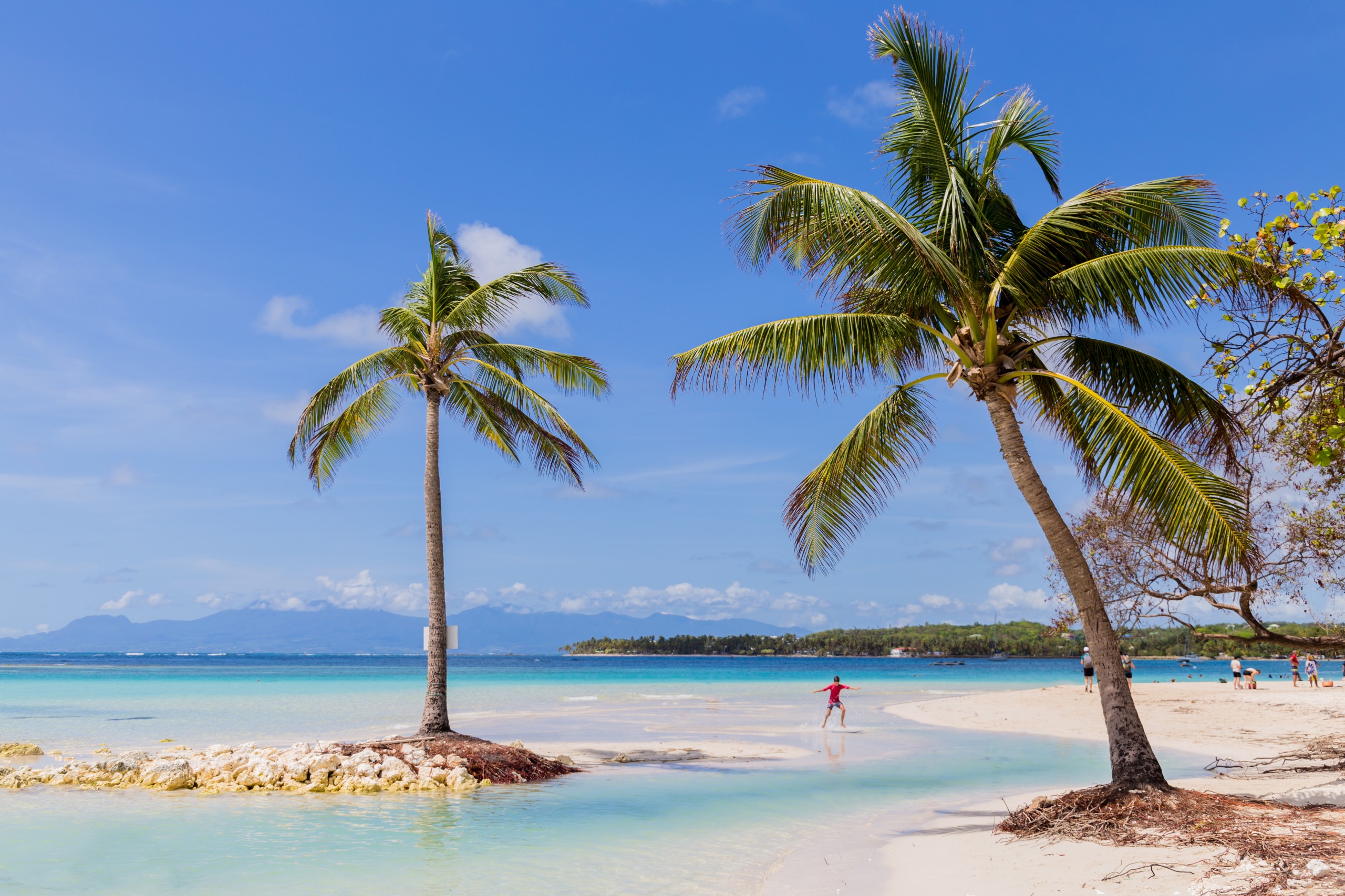
The dry tropical flora consists of soapbark trees, frangipani, Indian laurel, flamboyants, cacti and aloe. Beaches are lined with coconut palms and sea grape. Three rare and protected orchids still grow naturally here, a symbol of this unique preserved nature in the Caribbean.
What to see and do in Les Saintes?
Admire the Les Saintes Bay
Les Saintes Bay offers breathtaking panoramic views. Surrounded by verdant hills and bordered by sparkling turquoise waters, it reveals all the magic of the archipelago. For stunning views, climb to Fort Napoléon, perched on Morne Moire: this fort houses a fascinating museum, an exotic garden populated with iguanas and an overlook of the Caribbean Sea. At sunset, the bay is draped in golden light: viewpoints from Grande Anse beach or the fort's heights offer an unforgettable spectacle.
Explore Terre-de-Haut
The town, beating heart of the island, invites you to stroll on foot or by bicycle or stop in an art gallery. Among must-see sites:
- Fort Napoléon: historic symbol and essential viewpoint over the bay.
- Pompierre Beach: sheltered from winds and ideal for family swimming.
- Pain de Sucre Beach: famous for its basalt organs and exceptional underwater depths accessible by snorkeling.
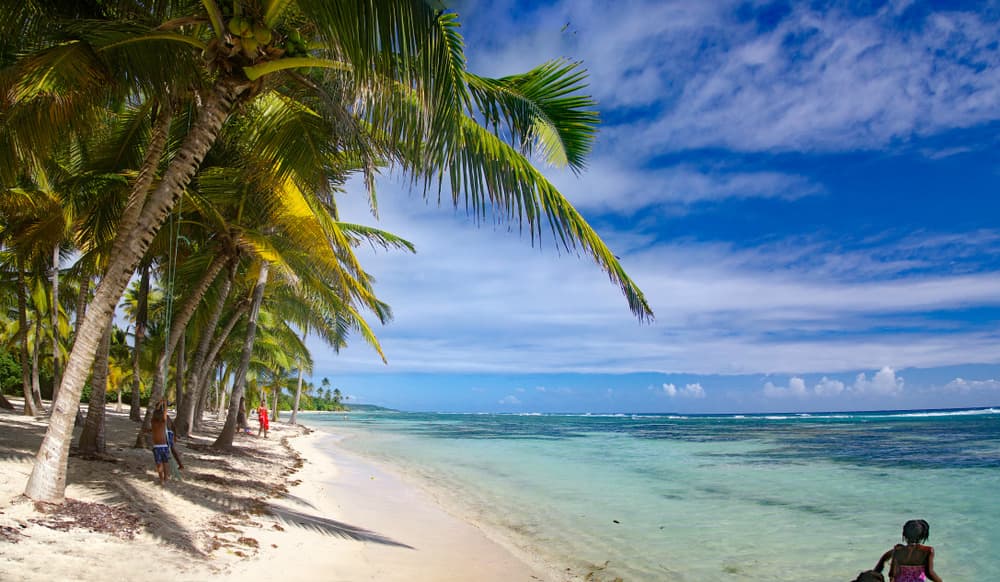
- Figuier Beach: with black sand and calm waters, perfect for relaxation.
- Anse Crawen: wilder, accessible by a small trail.
- Chameau Summit (309 m): highest point of the archipelago offering panoramic views over Dominica.
- Marigot Bay and Pointe Zozio: ideal for walks and sunsets.
Discover Terre-de-Bas
Wilder and more exclusive, Terre-de-Bas appeals to travelers seeking tranquility. It's a hiker's paradise and ecological discovery hub. The trails of Morne Abymes, Pointe à Vache or Grand Baie offer breathtaking views over neighboring islets and cliffs.
Among must-visit places:
- The Batterie du Fer-à-Cheval, restored in 2019, overlooking the sea,
- The ruins of Fidelin pottery, testament to local artisan history,
- The Saint-Nicolas de Myre church, listed as historical monument,
- The Mapou neighborhood, known for Bay-rum and Indian laurel production,
- Grande-Anse and Anse à Dos beaches, ideal for relaxation, diving or kitesurfing.
Enjoy water activities
The crystalline waters of Les Saintes harbor remarkable biodiversity. Sec Pâté, between Terre-de-Haut and Dominica, is one of the Caribbean's most spectacular scuba diving sites, reserved for experienced divers.
For gentler explorations:
- Snorkel at Pain de Sucre or Îlet à Cabrit;
- Kayak in glass-bottomed boats or paddleboard along the coasts,
- Rent a sailing boat or catamaran to discover inaccessible coves,
- Try kitesurfing at Grande-Anse, a spot renowned for its currents,
- Enjoy traditional fishing expeditions offshore.
Heritage and remarkable points of interest
Les Saintes also house rich historical and cultural heritage:
- Fort Napoléon museum and botanical garden,
- Nature reserves of Grand-Îlet and Morne Morel,
- Ruins of the infirmary and Fort Joséphine on Îlet à Cabrit,
- Batteries Carline and Modèle,
- Saintes Port lighthouse, Calvary chapel and Notre-Dame de l'Assomption church,
- Maritime cemetery and the boat-shaped house, nicknamed "the islands' boat",
- Souffleurs and Gros Cap cliffs, veritable geological jewels.
Culture and art of living
Les Saintes captivate as much through landscapes as through their simple and warm way of life. The culinary heritage is unique and reflects the archipelago's Creole soul. In Terre-de-Haut, don't miss the Tourment d'Amour, a small sweet tartlet filled with coconut, guava or banana preserve, topped with a golden biscuit. It's tasted still warm, accompanied by artisanal coconut punch served in harborside cafés.
In Terre-de-Bas, the Salako embodies local pride; a flat woven hat with wide brim, decorated with colorful madras fabrics. Handcrafted by artisans in the village of Petite-Anse, it testifies to ancestral know-how passed down through generations.
Located about fifteen kilometers south of Basse-Terre, the Les Saintes archipelago is accessible only by sea. The ferry remains the most practical and frequent transport option. Several companies operate daily regular services:
- From Trois-Rivières (south of Basse-Terre): the fastest and most direct crossing, 20 to 30 minutes to Terre-de-Haut.
- From Pointe-à-Pitre (Grande-Terre): the journey takes about 1 hour 30 minutes, offering magnificent views of the surrounding islands.
- From Saint-François, Sainte-Anne or Bouillante: less frequent departures but possible depending on season.
- From Dominica, Marie-Galante or Fort-de-France (Martinique): certain weekly tourist connections allow including Les Saintes in a regional cruise.
From Guadeloupe-Pôle Caraïbes airport, shuttles and taxis provide connections to Trois-Rivières, where you can leave your car in parking (vehicles are not allowed on the islands).
The archipelago also has an aerodrome at Terre-de-Haut, equipped with a 580-meter runway, reserved for small private planes. Commercial connections ceased in 2008, but the site remains used for recreational aviation or chartered flights.