Languages Spoken in Guadeloupe
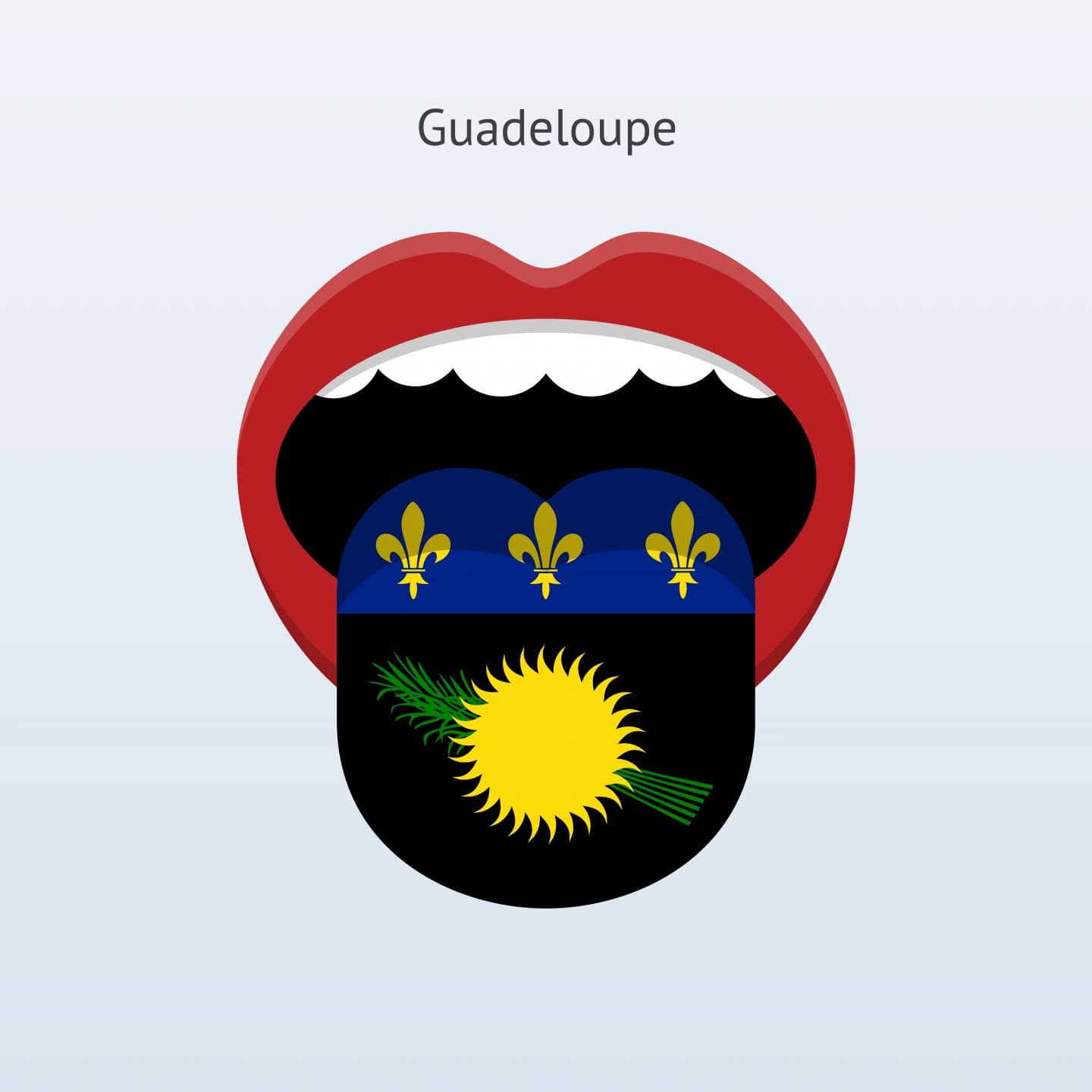
The official language in Guadeloupe is French, spoken by 84% of locals. The rest of the population also uses Guadeloupean French or Guadeloupean Creole, also known as Creole gwada.
The official language in Guadeloupe is French, spoken by 84% of locals. The rest of the population also uses Guadeloupean French or Guadeloupean Creole, also known as Creole gwada.
A Brief History
Since Guadeloupe is a single-department French overseas region, French became the official language of the territory according to Article 2 of the Constitution of October 4, 1958. It is therefore prioritized for all administrative procedures, education, and literature. Creole is primarily used in private and family conversations. Representatives of the oldest generations do not always speak French fluently, but rather Guadeloupean Creole. This language was created in the 17th century to facilitate communication between the country's different ethnic groups (Europeans—predominantly French—Africans, and indigenous peoples).
The history of Creole is tied to slavery, particularly of Africans. Derogatory judgments were passed on the vernacular at a certain time, with parents and teachers forbidding their children from speaking Creole. Nevertheless, children continued to use Creole among themselves, allowing the language to endure.
Today
There is currently an effort to revitalize the Creole language. While the majority of the Guadeloupean population speaks French, some elderly people who did not have the opportunity for extended schooling prefer to express themselves in Creole. In conversations between friends or within families, you will also find Creole gwada. However, it is considered impolite for a child to address an adult directly in Creole. Additionally, young people have somewhat integrated Jamaican English into Creole. As a result, Guadeloupean adults struggle to understand their young people when they speak Creole.
Guadeloupean Creole
An irresistible blend of old French and the language of African slaves, Caribbean tribes, and Indian migrations, it possesses certain linguistic characteristics different from standard metropolitan French. A heritage language of the country, Creole is an integral part of the identity of the Guadeloupean population and is linked to the values and roots of the island.
It's worth noting that Guadeloupean Creole is composed of 90% French words. It does not use formal address. Being a rough language, the grammar resembles expressions that can be somewhat crude and may cause confusion, particularly for "zoreilles" (the name given to mainland French people by Guadeloupeans). Creole is also a highly colorful and philosophical language through its expressions.
Let's Learn Creole gwada…
A bit of phonetics: the sound [k] is written with a K and the sound "in" (as in "intimate") is written "en", and the sound "an" (as in "and") is written "an". The letter "c" does not exist, nor does the combination "qu".
Hello: Bonjou
Good evening: Bonswa
Goodbye: Ovwa
Please: Si ou plé
How are you?: Sa ou fé
Yes: Wi
No: Vonn
Excuse me: Eskizé mwen
Differences and Similarities
Guadeloupean Creole is similar to that of Dominica, Martinique, and Saint Lucia, but differs somewhat from Haitian Creole. It has slight connections with African and English languages.
For example, the famous Caribbean fritter called "accras" in Creole resembles the word "Akara" in Bambara, a Malian language; the word "awa" in Creole means no, the same as the word "awo" in Mina (one of the subgroups of Niger-Congo languages); the Creole term "biguidi", used to describe a person who has lost their strength or composure, strangely resembles the English "to be giddy", which means to be dizzy, feverish, or lightheaded.
Guadeloupeans living in the Saintes archipelago (Terre-de-Haut and Terre-de-Bas) also have their own Creoles, due to their settlement history (Breton, Norman, and Poitevin colonists). Their Frenchified pronunciations, their syntax, their sonorities, and their particular expressions set their Creoles apart.
In short, if you speak French, you will have no trouble communicating with the Guadeloupean people; otherwise, English remains the universal language.