Demographics of Guadeloupe
The Guadeloupe population constitutes a true identity patchwork thanks to its rich and diverse cultural blend. A land of ethnic diversity, the butterfly island brings together African, Indian, South American, Syrian-Lebanese and European cultures to guarantee a journey rich in discoveries for its visitors.
The Guadeloupe population constitutes a true patchwork of identity thanks to its rich and diverse cultural blend. A land of ethnic diversity, the butterfly island brings together African, Indian, South American, Syrian-Lebanese and European cultures to guarantee a journey rich in cultural discoveries for its visitors.
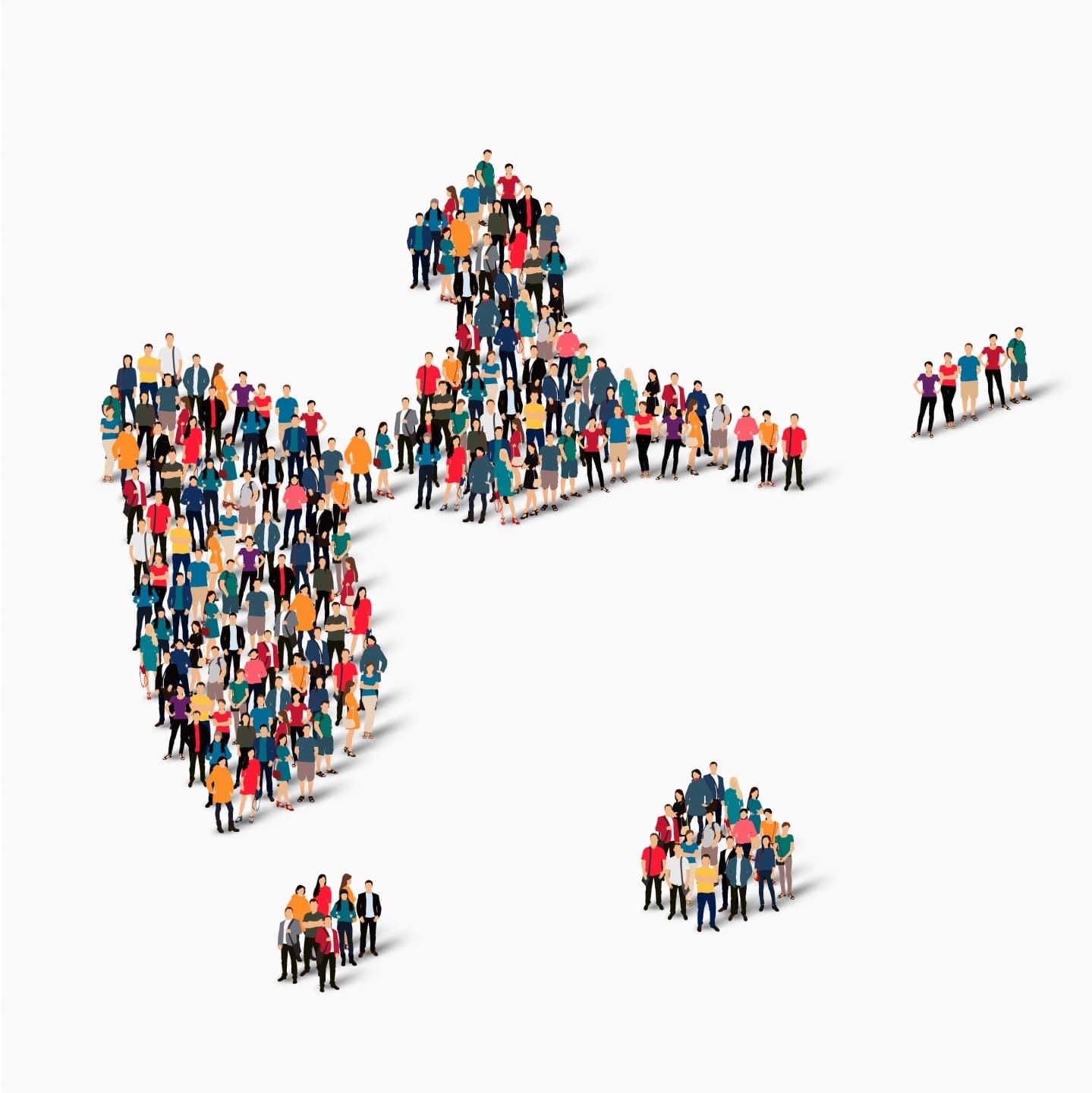
The Guadeloupe population at a glance
A true concentration of humanity, the population of Guadeloupe reunites all skin tones, all religions and all origins, living together in harmony. It is made up largely of mixed-race individuals and descendants of enslaved people (blacks), but it is the Amerindians who are the descendants of the island's first inhabitants. Europeans, particularly French nationals, also called « Zoreilles » occupy the territory as well. This makes sense since Guadeloupe is one of the Overseas Departments (DOM) of mainland France. You will not fail to meet Indians in Guadeloupe. During the 17th and 18th centuries, their ancestors were brought from India as cheap « labor » to replace enslaved Africans. Other communities such as Chinese, Syrians and Lebanese enrich the demographic diversity of Guadeloupe and work primarily in commerce.
Notes from the past
History explicitly reveals the origin of this demographic blend in Guadeloupe and what makes the richness of the country's culture. It all began with Amerindian settlements around 3000 BC. The Arawaks, part of the Amerindian agro-ceramic people were massacred by the Carib Indians, the main occupants of the land until the mid-17th century. This Indian people named the country « the island of Karukera » (« island of beautiful waters » in the Carib language). The year 1493 was marked by the arrival of Christopher Columbus on the island, and around 1502, the Spanish occupied the territory. In 1635 began French colonization with the black slave trade. The British entered into territorial conflict with the French before the abolition of slavery. From 1852 to 1861, there was African immigration. When this was prohibited, Indian immigration replaced it from 1854 to 1890. Around 1859, Southeast Asian and Far Eastern immigration began: the Chinese, the Annamese, the Japanese, etc. The history of the country clearly demonstrates the origin of ethnic mixing on the island.
Distribution of population across Guadeloupe territory
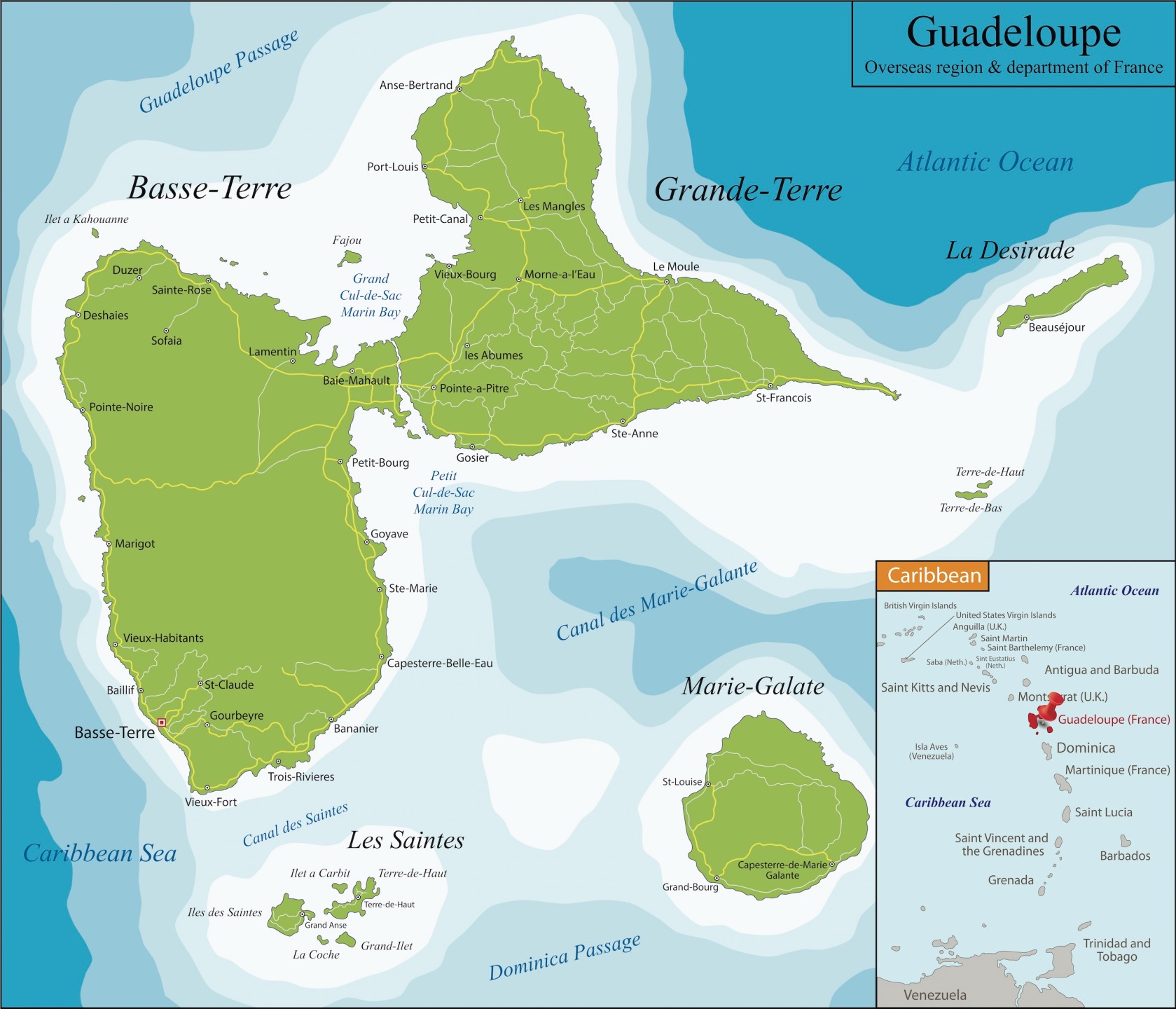
In 2018, Guadeloupe has 395,000 inhabitants distributed across 32 municipalities in the territory, 10 of which belong to Grande-Terre, 16 to Basse-Terre, 3 for Marie-Galante, 2 for Les Saintes and one for La Désirade.
The most populous municipalities are: Les Abymes (53,491 inhabitants in 2017), Baie-Mahault with 30,929 inhabitants and Le Gosier with 26,783 inhabitants the same year. Pointe-à-Pitre, which is the economic center of the country, contains only 15,923 inhabitants (2017), with the highest population density at 5,986 inhabitants/km2. This city is home to industrial areas, a major port and an international airport. The administrative capital, Basse-Terre, has 10,058 inhabitants with a density of 1,740 inhabitants/km2.
Economic sectors
The Guadeloupe population is predominantly young. People in the 15 to 64 age group represent 66% of the total population. This population is mainly engaged in agriculture, a fundamental economic sector in Guadeloupe despite the decline of its weight on the national economy. This activity employs 12% of the active population, relying essentially on sugarcane and banana crops. Livestock farming and fishing are also related to agriculture. According to INSEE, Guadeloupe has just over a thousand fishermen and 750 fishing vessels.
Tourism is also among the main economic sectors. Since Guadeloupe is an archipelago with postcard-worthy landscapes, the country's tourism plays an important role in creating added value and employment.
With its 44,298 businesses, Guadeloupe employs a total of just over 112,475 employees. Indeed, several other activities occupy the population: commerce, personal services, transport, construction, health sector, etc.
Cultures, religions and traditions
The ethnic diversity on the island of Guadeloupe is reflected through the country's culture and traditions, particularly in music and dance. Gwoka, originating from Africa, characterizes Guadeloupe celebrations through the sounds of bamboulas and drums as well as the chants that accompany these musical instruments. The bouladjel adds more rhythm to Gwoka. Mazurkas and biguines are rather influenced by European tradition. The Creole quadrille and especially the unmissable zouk that emerged in the 1980s also make Guadeloupeans' cultural reputation.
Cockfighting, ox-pulling contests and goat-pulling contests are also among the cultures and traditions of the population.
94% of the population are Catholic. 3% are Hindu and practice African religions. 2% are Jehovah's Witnesses and the remaining 1% are Protestant.
In short, the Guadeloupe population is young and richly diverse. It generally speaks French. This population also reflects a perfect blend of rural and modern worlds, as well as its fascinating history through the architecture of the houses. During your journey through Guadeloupe, learn more about the culture and lifestyle of the Caribbean by immersing yourself in the Caribbean atmosphere of the locals.