Marie-Galante
A limestone island of 158 km² southeast of Guadeloupe, defined by sugarcane, three working distilleries and long beaches still largely untouched by mass tourism.
Marie-Galante stands apart from mainland Guadeloupe through its geometry: an almost circular island of 158 km² positioned 30 kilometers southeast of Grande-Terre, nicknamed la grande galette by locals. Three municipalities divide the territory: Grand-Bourg in the southwest where the ferry docks, Saint-Louis on the west coast, and Capesterre-de-Marie-Galante facing the Atlantic. Between these towns stretch kilometers of sugarcane fields, a few ponds, limestone cliffs along the windward coast, and a central plateau that rises to 204 meters at Morne Constant.
Our team loves this island for what it has preserved: a rural rhythm that has faded elsewhere in the archipelago. You can still spot cabrouets, ox-drawn carts used to transport cane during harvest season, between February and June. The three active distilleries—Bielle on the heights of Grand-Bourg, Bellevue on the road to Capesterre, and Poisson north of Saint-Louis, which produces the celebrated Père Labat—distill recognized agricultural rum, including the famous 59°, stronger than the Caribbean average.
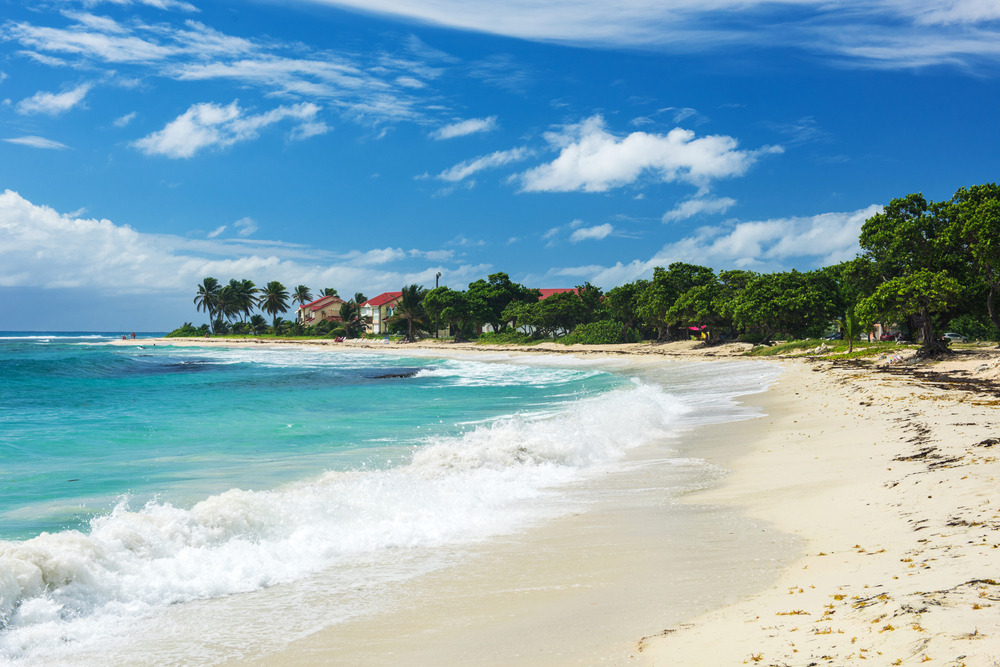
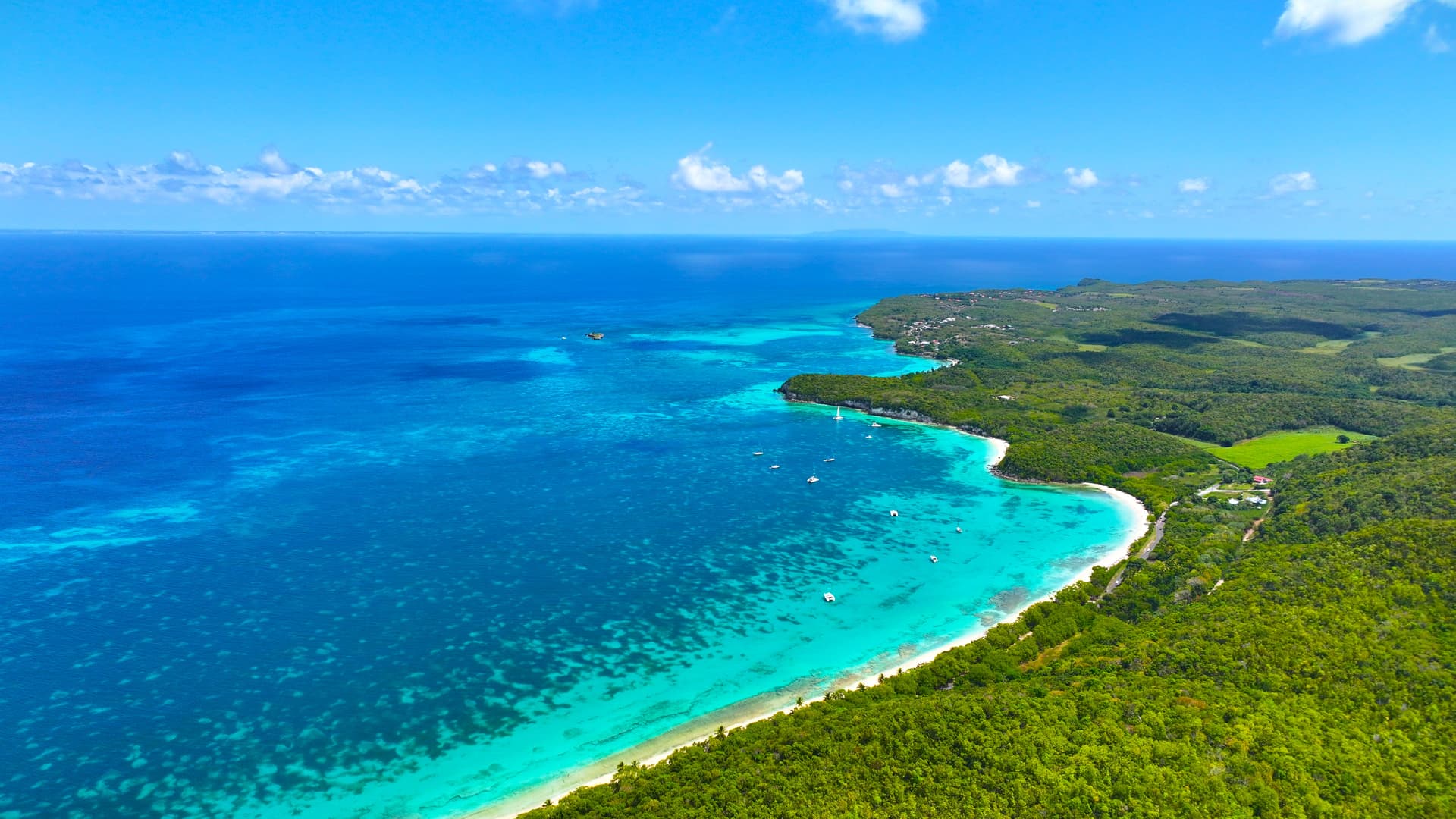
The geology tells a different story than volcanic Basse-Terre. Marie-Galante is an uplifted limestone platform, which explains its spectacular cliffs on the eastern facade, notably at Gueule Grand Gouffre and Caye Plate, where the sea rushes into arches carved by erosion. On the opposite side, the leeward coast unfolds white sand beaches lined with grape trees: the beach of la Feuillère near Capesterre stretches nearly 2 kilometers, while Petite Anse and Folle Anse form the island's other major sandy curves.
Built heritage concentrates around sugar history. The Moulin de Bézard, restored, is one of the few windmills still equipped with wooden and canvas sails in the entire Caribbean. Château Murat, a 19th-century sugar plantation house, now hosts an eco-museum tracing the plantation economy and enslaved life on the island. These sites are not mere decoration: they illuminate what you later see in the fields and distilleries.
At table, bébélé remains the emblematic dish: a slow-cooked stew of tripe, breadfruit and green bananas, traditionally served on Saturday. You'll also taste matété de crabes during Easter season, and sirop batterie, thick sugarcane molasses that distilleries sell in bottles. Patron saint festivals punctuate the summer, with the Fête du Cabri at Pentecost in Capesterre, blending races, gastronomy and gwo ka music.
What distinguishes Marie-Galante from a simple day trip is slowness. Distances are short, a loop around the island measures 56 kilometers, but population density remains low at around 10,000 permanent residents, and traffic is limited to a few cars and scooters. You come here to slow down, not to tick off sites.
Must-see
The cliffs of Gueule Grand Gouffre. On the northeast coast, a 9-meter-high limestone arch where the Atlantic crashes below. Short 10-minute trail from the parking area; best visited in the morning for light.
Poisson Distillery visit. Producer of Père Labat rum, operating since 1860 north of Saint-Louis. Guided tasting of the 50°, 59° and aged barrels, at a site where cane still arrives by ox-cart in season.
Plage de la Feuillère. Two kilometers of white sand and coconut palms east of Capesterre, a lagoon protected by a coral barrier. Calm swimming, ideal for a day without plans.
Moulin de Bézard and Château Murat. Two witnesses to 18th and 19th-century sugar economy. The windmill still operates during demonstrations, the château houses an eco-museum on slavery and plantation life.
Lunch with bébélé at a local home. The tripe stew, breadfruit and green bananas simmered for hours, traditionally served Saturday noon at a few family tables in Grand-Bourg and Capesterre.
When to go
Marie-Galante follows the Caribbean calendar with a nuance: the island, flatter and drier than Basse-Terre, receives less rainfall, around 1,200 mm annually versus 3,000 to 5,000 mm on the heights of La Soufrière. The dry season, called carême, runs from January to April, with temperatures of 24 to 29°C, steady trade winds and little rain. This is also the cane harvest period, when distilleries run at full capacity and the rural landscape comes alive.
From July to October comes the rainy season, warmer (28 to 32°C) and more humid, with a statistical hurricane peak in August and September. Showers are brief but intense, and some accommodations close for a few weeks in September. May, June and November constitute good shoulder seasons: vegetation still green, low crowds, gentler rates. Swell can be pronounced on the windward coast from December to February, with no impact on leeward beaches which remain swimmable year-round.
Practical advice
Plan for a minimum of 2 nights on the island, ideally 3 or 4 to truly disconnect. Access is via ferry from Pointe-à-Pitre (45 minutes to 1 hour depending on the company, several departures daily) or from Saint-François. Once on the island, renting a car, scooter or electric bike is necessary: there is no regular public transport. The full loop by car can be completed in half a day, but we recommend spreading it over two days to include a distillery, a beach and a heritage site without rushing.
Marie-Galante combines well with Grande-Terre for logistics (direct ferry from Pointe-à-Pitre or Saint-François), and with Les Saintes for those wanting to chain two small islands with different atmospheres, one rural and sugary, the other maritime and steep. Comfort remains simple: a few charming hotels, many guesthouses and bed-and-breakfasts run by Marie-Galante families. The island suits contemplatives, cyclists, rum and heritage enthusiasts, families seeking calm beaches. It will suit less those searching for varied evening dining options or nightlife, which remain limited outside patron saint festivals.