La Désirade
Island 11 km off Saint-François, untouched by mass tourism: limestone plateau, calm beaches, artisanal fishing and just 1,500 inhabitants.
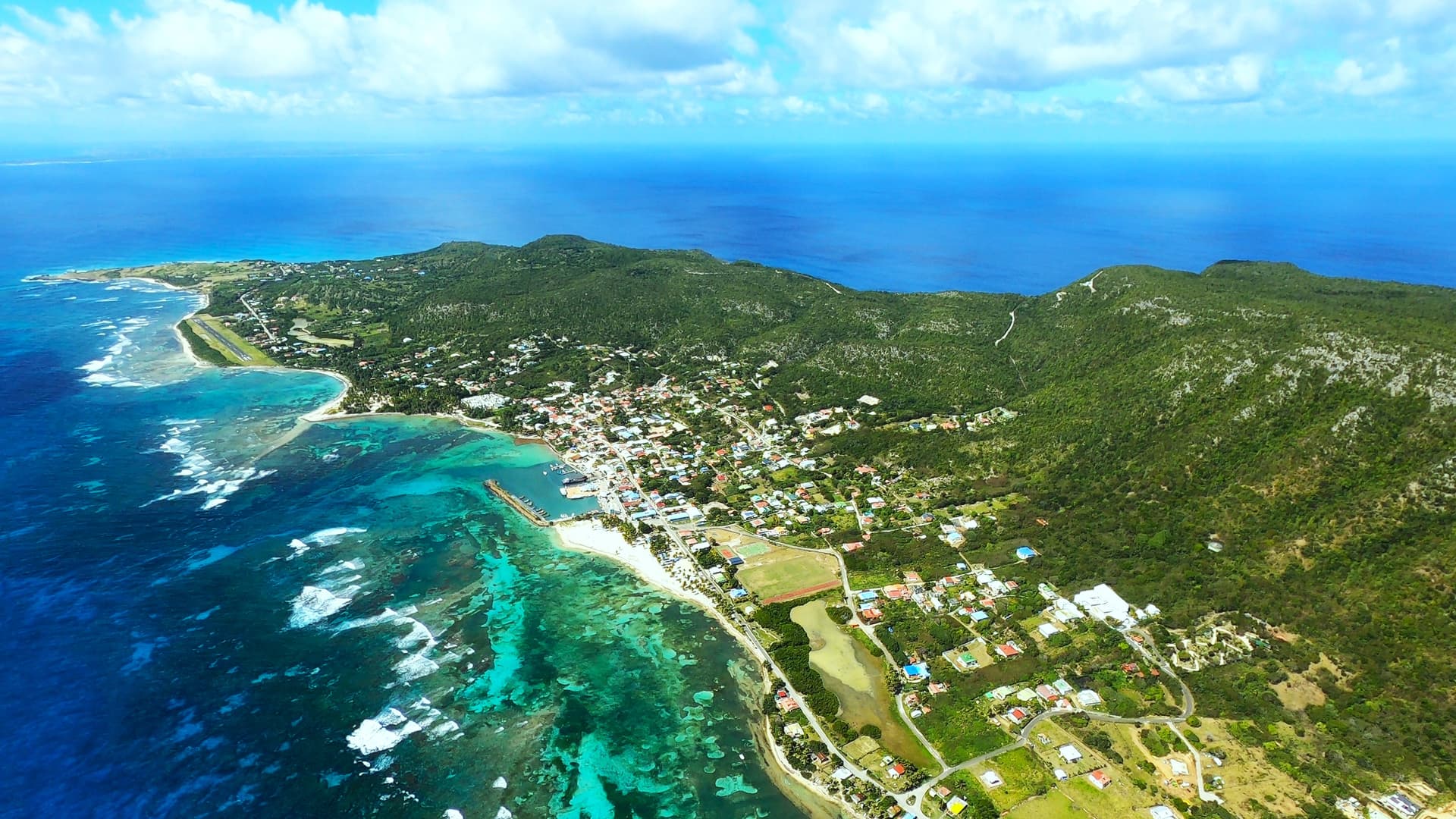
La Désirade is the easternmost island of the Guadeloupe archipelago, positioned 8 kilometers off the tip of Pointe des Châteaux. Our team considers it a world apart within the destination: 11 kilometers long by 2 kilometers wide, fewer than 1,500 inhabitants, a single paved road running along the southern coast, and a central limestone plateau perpetually swept by trade winds. It is an island to be traversed slowly, where you encounter more free-roaming goats than cars.
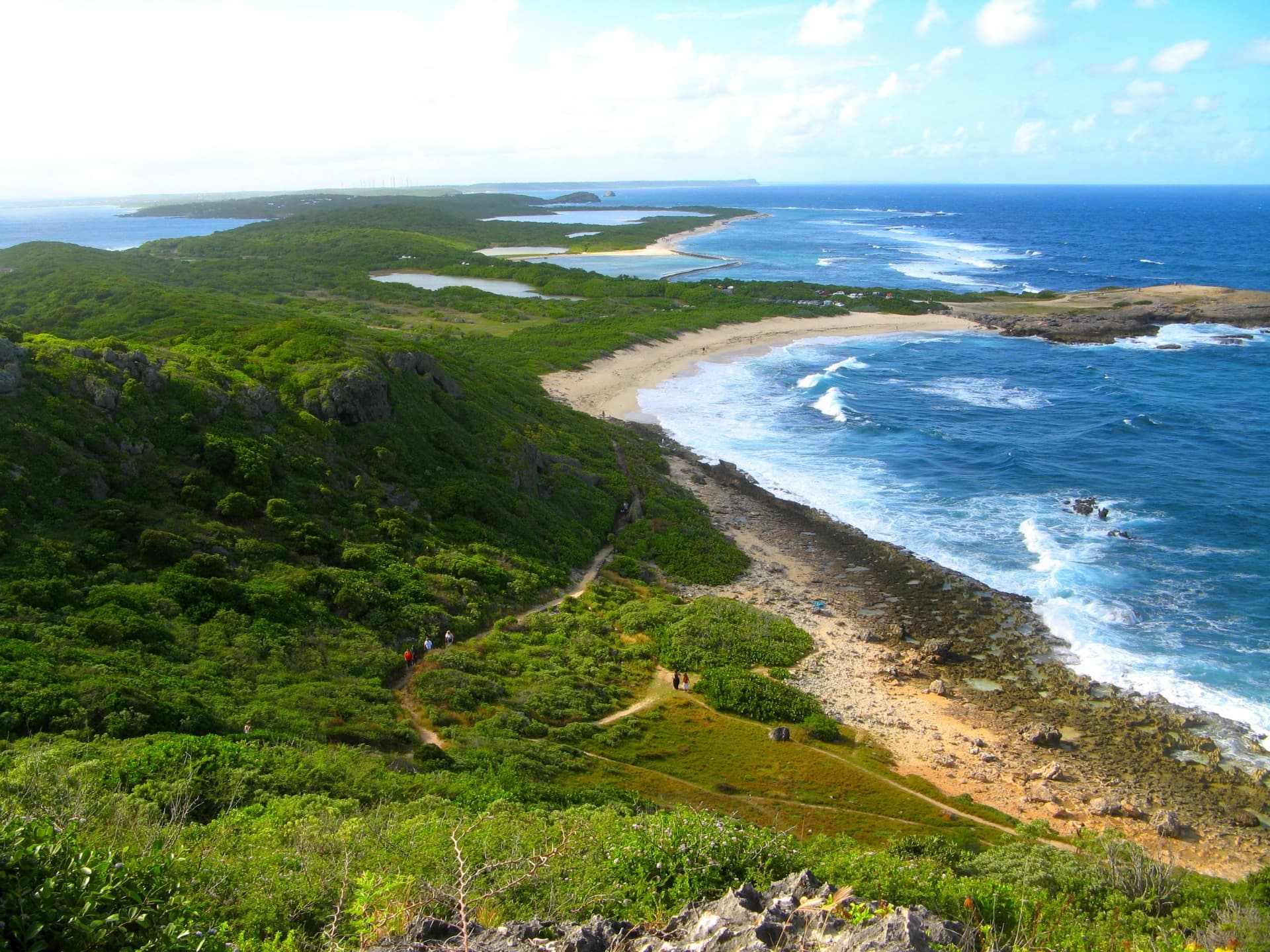
Geology largely explains its character. La Désirade's foundation, dating back 145 million years, contains the oldest rocks in the Lesser Antilles. The geological reserve covering the plateau protects these formations, as well as a dry flora adapted to the winds: barrel cacti, agaves, lignum vitae trees. From the viewpoint at Grande Montagne, at 273 meters, the entire southern coast stretches before you to the islets of Petite Terre, and on clear days you can distinguish Marie-Galante to the southwest.
Life concentrates on the sheltered southern coastal strip. Beauséjour, the main village, arranges its low houses around the church and town hall. Further east, Le Souffleur preserves the memory of the shipyards that built wooden saintoises vessels until the 1990s. Baie-Mahault, at the eastern extremity, still depends heavily on fishing: conch, spiny lobster, red snapper, and pufferfish are unloaded each morning onto the docks.
The island's history has long been marked by isolation and marginalization. A leper colony operated here from 1728 to 1958, its ruins still visible west of Beauséjour. This seclusion paradoxically protected La Désirade from mass tourism development. There are no large resort hotels, only a few bed-and-breakfasts, family guesthouses, and two or three beachfront fish restaurants. Shark bokit, red snapper court-bouillon, and crab matété (prepared especially around Easter) constitute the fare at the better establishments.
To get there, the ferry from Saint-François in Grande-Terre takes 45 minutes, with three to four daily crossings depending on the season. Once there, scooters or electric bikes rented at the dock are more than sufficient: circling the inhabited area takes half a day if you stop at the main beaches. The plateau trails are for walking, with hat and water essential as no shade tempers the sun up there.
What we help our travelers understand is that La Désirade is not visited as an attraction. It is experienced at the island's pace: a swim at Fifi or Le Souffleur late morning, a siesta under grape trees, a late meal with a local family, and return to the dock around 4 or 5 p.m. for those staying just one night. It is a stopover that rebalances one's understanding of Guadeloupe.
To discover
Limestone plateau and geological reserve. Climb on foot or by scooter to the Grande Montagne viewpoint at 273 meters to cross a cactus savanna swept by trade winds and observe the oldest rocks in the Lesser Antilles.
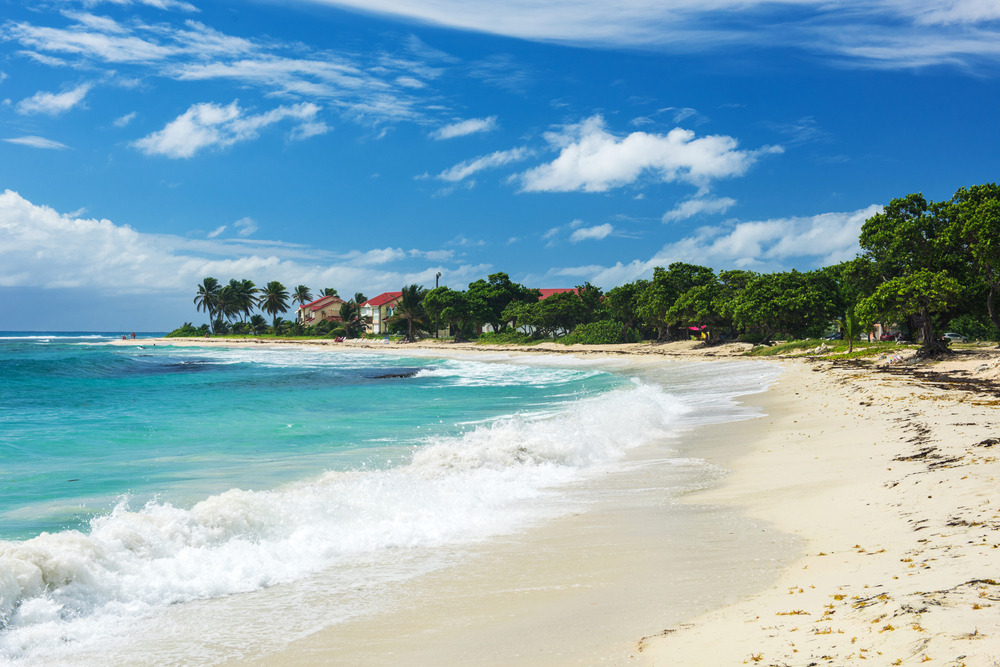
Pointe du Souffleur beach. Coconut grove lining clear sand, shallow and calm waters, picnic tables by the sea where you can lunch on salt-cod fritters and grilled fish purchased from the nearby shack.
Leper colony ruins. Discreet vestiges west of Beauséjour of an establishment that operated from 1728 to 1958. The site tells the story of isolation that shaped Désiradien identity.
Baie-Mahault harbor and conch fishing. At the island's eastern tip, fishermen unload their catch late morning. This is where you find the freshest grilled spiny lobster, in two or three family-run beachside shacks.
Island loop by scooter or electric bike. A single road, 22 kilometers round-trip, runs along the southern coast between Beauséjour, Le Souffleur, and Baie-Mahault. Allow half a day including swimming stops.
When to visit
La Désirade is one of Guadeloupe's driest zones, with approximately 1,000 mm of rainfall annually compared to 3,000 to 5,000 mm in Basse-Terre. The most pleasant period for our travelers extends from January to April: stable temperatures around 26 to 28°C, steady trade winds, clear skies. From May to June, heat rises slightly and humidity sets in, but the island remains pleasant.
The season to avoid is September-October, both for cyclone risk (the island is exposed, lacking the sheltering relief of Basse-Terre) and because the ferry from Saint-François may be suspended for several days in heavy swells. July and August remain viable but local crowds build on weekends, with many Guadeloupeans coming to picnic at Le Souffleur.
Practical advice
We recommend a minimum of one full day, ideally two days with a night on the island to enjoy it once the day visitors have left. The crossing from the Saint-François port in Grande-Terre takes 45 minutes, with crossings around 8 a.m. and returns between 4 and 5 p.m. No airport, no conventional car rentals: you get around by scooter, electric bike, or shared taxi arranged in advance.
La Désirade pairs naturally with Grande-Terre, on which it logistically depends, and fits well into a southern islands loop with Marie-Galante (45 minutes by boat from Saint-François as well) and Les Saintes (from Trois-Rivières in Basse-Terre). Comfort levels are simple: bed-and-breakfasts, small guesthouses, not systematically air-conditioned. It is a stop suited to contemplative travelers, hikers, families seeking calm beaches without entertainment, and those wanting to understand Guadeloupe beyond its two main islands. Those seeking nightlife, spas, or fine dining will find it less appealing.