Bouilante
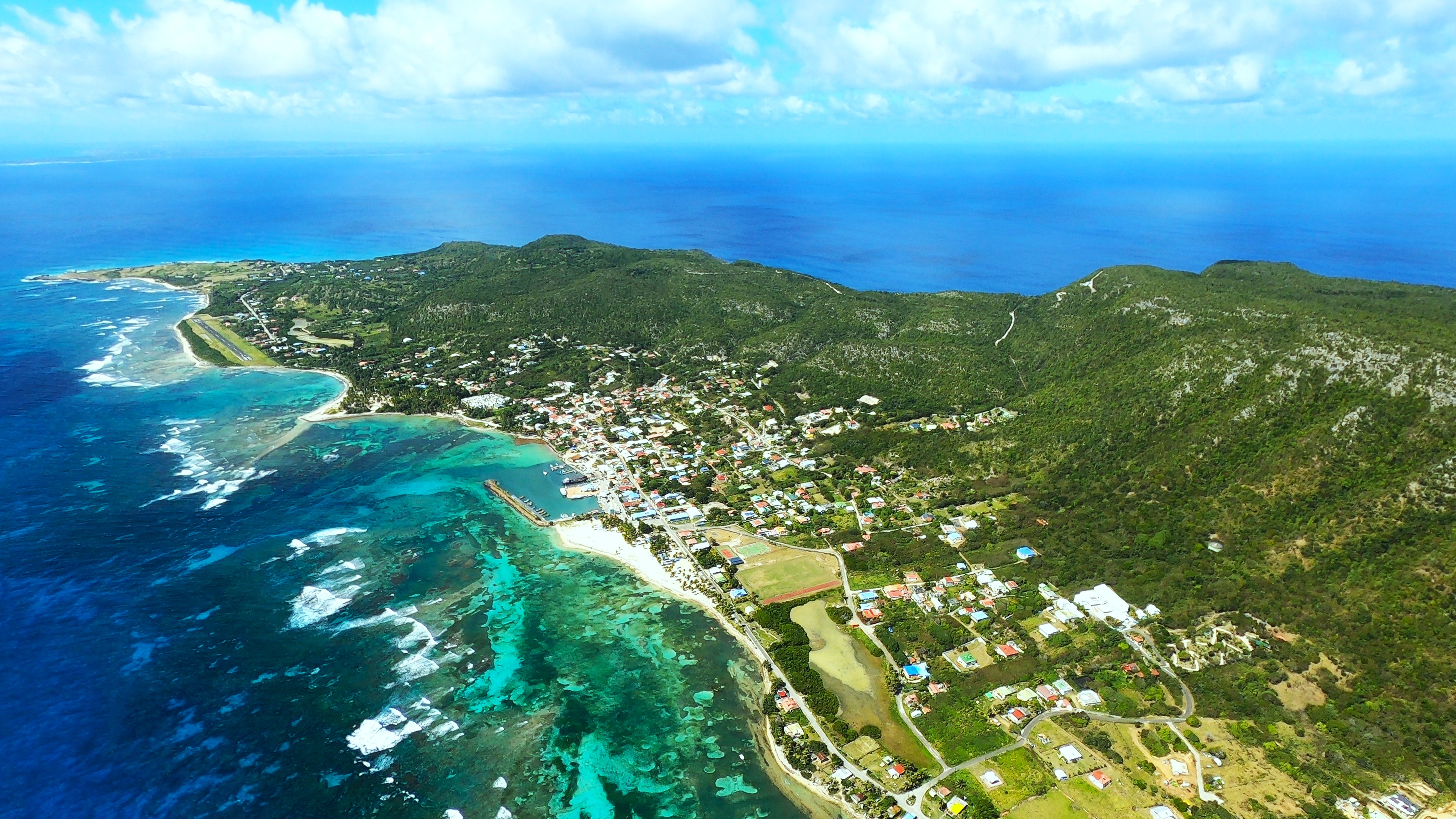
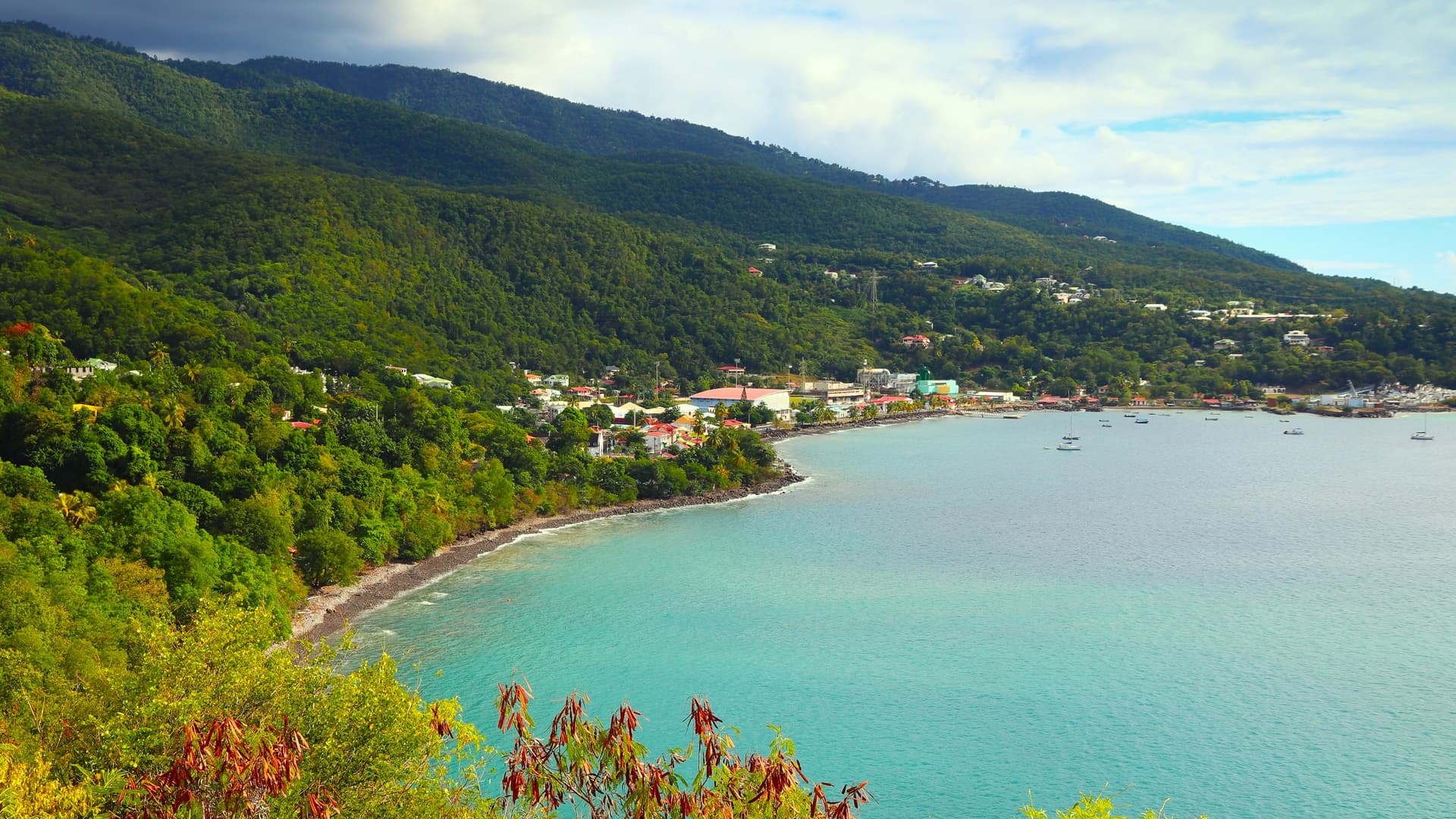
Nestled on the western coast of Basse-Terre, between the Caribbean Sea and tropical highlands, Bouilante is a little slice of paradise that perfectly embodies the volcanic and wild soul of Guadeloupe. Famous for its hot springs, exceptional marine ecosystems, and laid-back charm, the town captivates both diving enthusiasts and travelers seeking either tranquility or adventure.
Nestled on the western coast of Basse-Terre, between the Caribbean Sea and tropical highlands, Bouilante is a little slice of paradise that perfectly embodies the volcanic and wild soul of Guadeloupe. Famous for its hot springs, exceptional marine ecosystems, and laid-back charm, the town captivates both diving enthusiasts and travelers seeking either tranquility or adventure.
Where is Bouilante located?
Bouilante sits at the heart of the Windward Coast, in the western section of Basse-Terre, on a stretch protected from Atlantic trade winds—hence its name, "Côte-sous-le-Vent" (Leeward Coast). The municipality spans 43.5 km², stretching from wooded ridges down to the shoreline. It is bordered by:
- The Caribbean Sea to the west
- Pointe-Noire to the north, with the Colas River as a natural boundary
- Vieux-Habitants to the south, around Anse à la Barque and Ravine Renoir
- Petit-Bourg to the east, via the Mamelles mountain range and the Pitons de Bouilante.
A volcanic municipality between sea and mountain
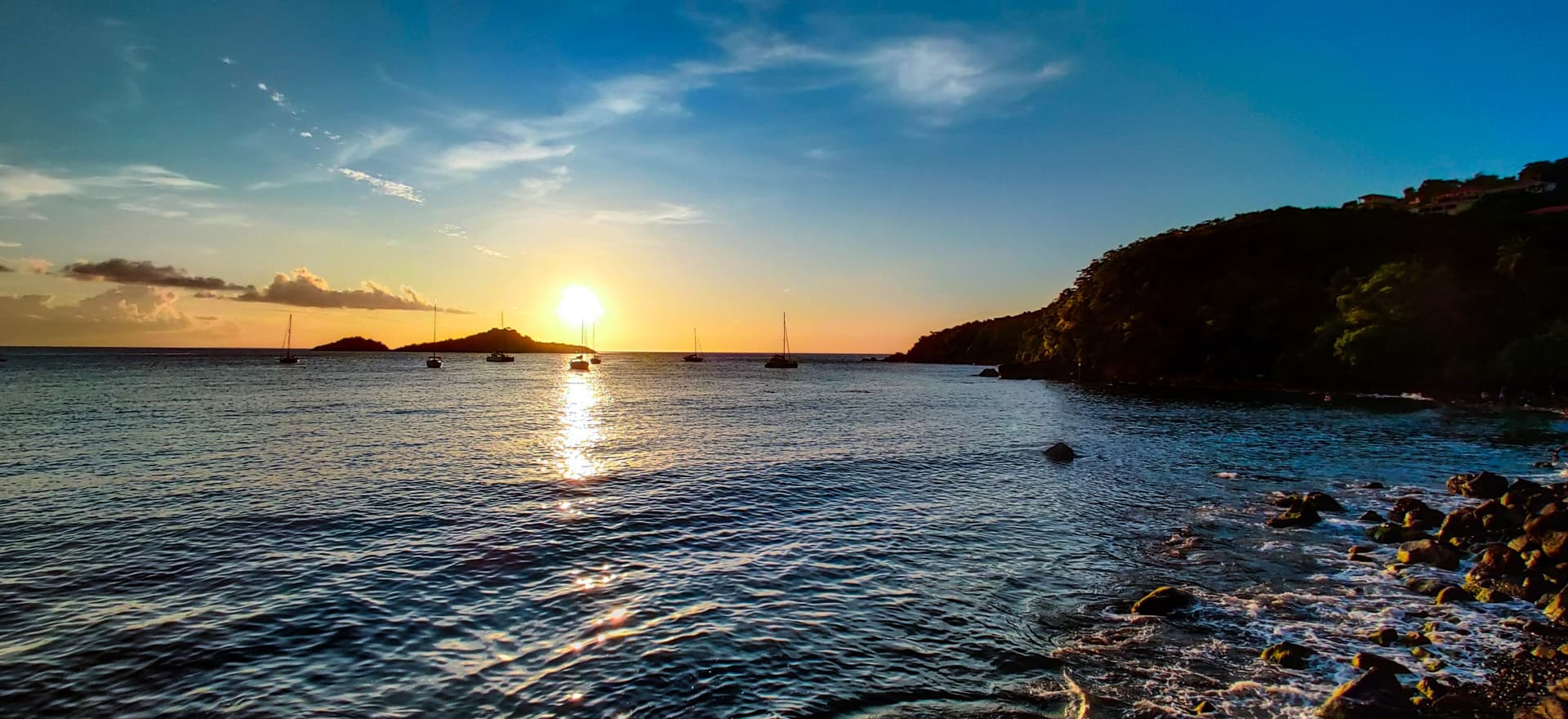
Bouilante stretches between the lush slopes of a volcanic massif and the turquoise waters of the Caribbean. Its name comes from natural geothermal springs that "bubble" beneath the surface, erupting both on mountainsides and at sea's edge. This telluric activity, characteristic of the region, is visible even in the sea itself, and led to the creation of one of France's only geothermal power plants.
History
Founded in the 17th century, Bouilante ranks among Guadeloupe's oldest municipalities. The first colonists settled here around 1635, shortly after landing at Pointe Allègre and the founding of Vieux-Habitants.
Originally called Islets à Goyaves ("guava isle"), the locality took the name Fontaines Bouillantes in the early 18th century, referring to its numerous hot springs—geothermal sources sometimes jetting up at nearly 80°C and prized for their therapeutic properties. Residents once used them for cooking and bathing, and these natural phenomena gave rise to the definitive name Bouilante, adopted at the end of the Old Regime.
The municipality reached its peak in the 17th century, when the French kingdom transformed Guadeloupe into a settler colony based on family farming. Volunteers from mainland France, among the first Europeans established in the Caribbean, learned the fundamentals of tropical agriculture, while Amerindians were gradually marginalized, as revealed by the 1664 and 1671 censuses.
In 1865, Bouilante was struck by a severe cholera epidemic claiming over 200 lives—roughly 10% of the population. Its town hall, built in 1886 in the style of a wooden Creole house, lost its official function in 1968 with the construction of a new building, then was restored and converted into a Maison des Aînés (Elders' Center) in 1990.
Once prosperous thanks to coffee, cotton, banana, and vanilla cultivation, Bouilante experienced youth emigration to cities after 1960. Today, the municipality remains faithful to its identity while embracing the future through the presence of the only geothermal power plant in the French Antilles. This facility harnesses heat from its natural springs and exemplifies the community's capacity to sustainably develop its resources.
What to see and do in Bouilante?
Explore the marine depths of the Cousteau Reserve
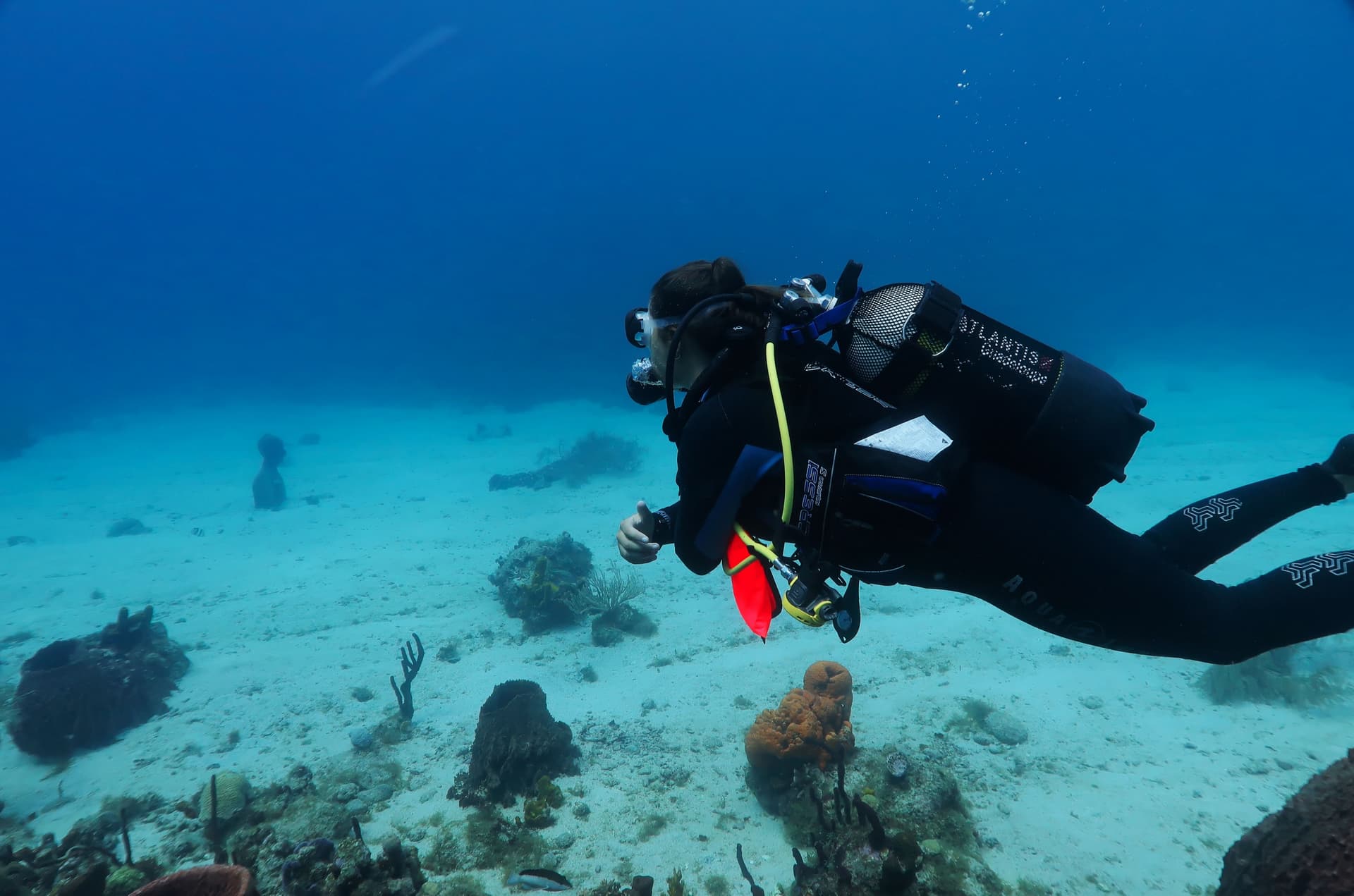
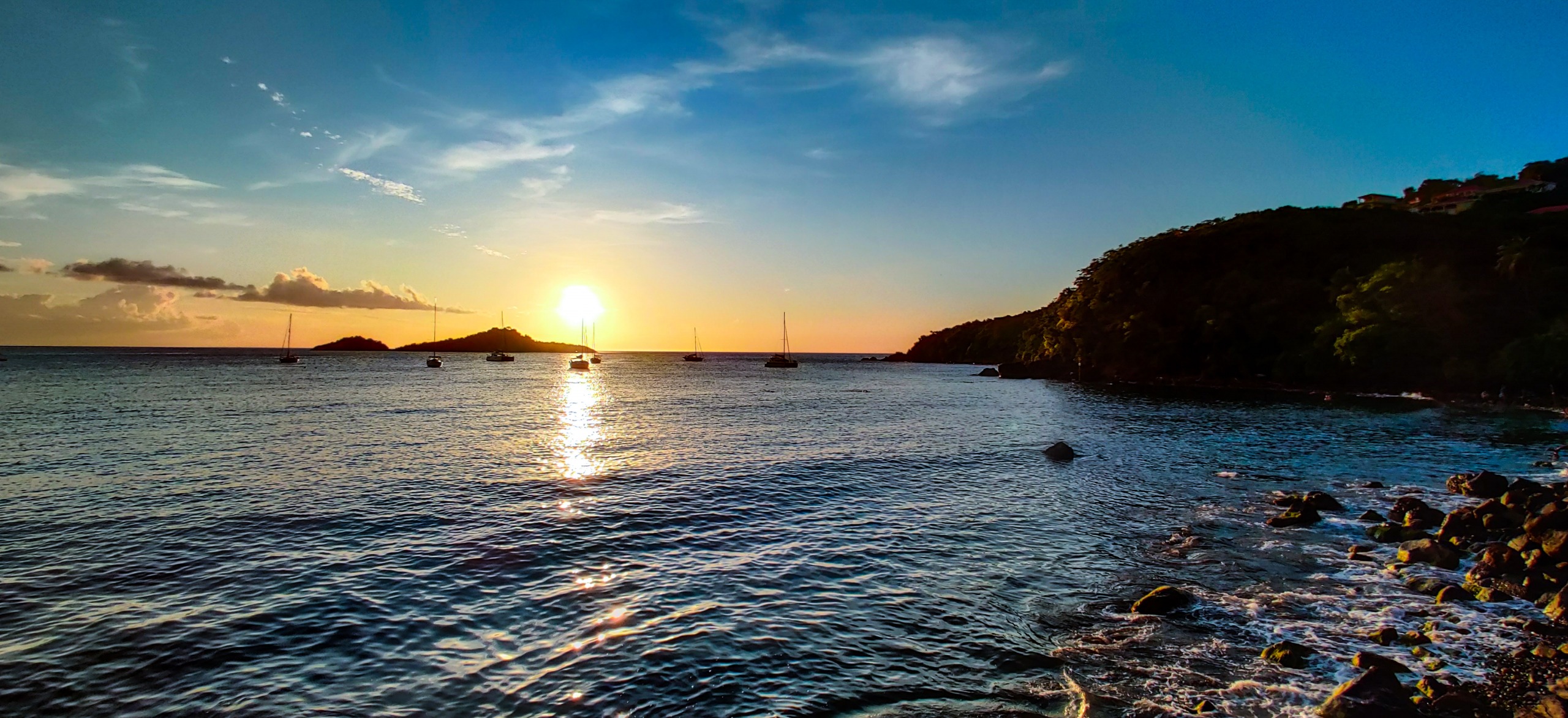
The Cousteau Reserve is unmissable in Bouilante. Designated as a protected marine area, it encompasses the Pigeon Islets. Identified in the 1960s by Commander Cousteau himself, this zone boasts exceptionally rich marine ecosystems. Sea turtles, multicolored corals, tropical fish, sponges, lobsters, dolphins, and even humpback whales (in season) coexist in translucent waters.
Scuba diving, snorkeling, kayaking, glass-bottom boat cruises—all options are available, whether you're an experienced diver or simply curious. Specialized clubs offer guided excursions, including for beginners. Children especially love discovering the underwater world aboard the Nautilus, a glass-hulled vessel departing from Malendure beach.
Bathe in natural hot springs
Natural hot springs at sea's edge offer a relaxing and unique experience, particularly:
- Thomas Baths, a small thermal pool at ocean's edge (70°C, meant to be diluted with seawater)
- Bain de Curé, at Anse de Sable, carved into rock
- Petite-Anse hot spring, where water surges from the seabed
- Temperate outflow from the geothermal plant, accessible at low tide near the pebble beach.
These mineral-rich waters are renowned for their health benefits, and access is free.
Relax on varied beaches
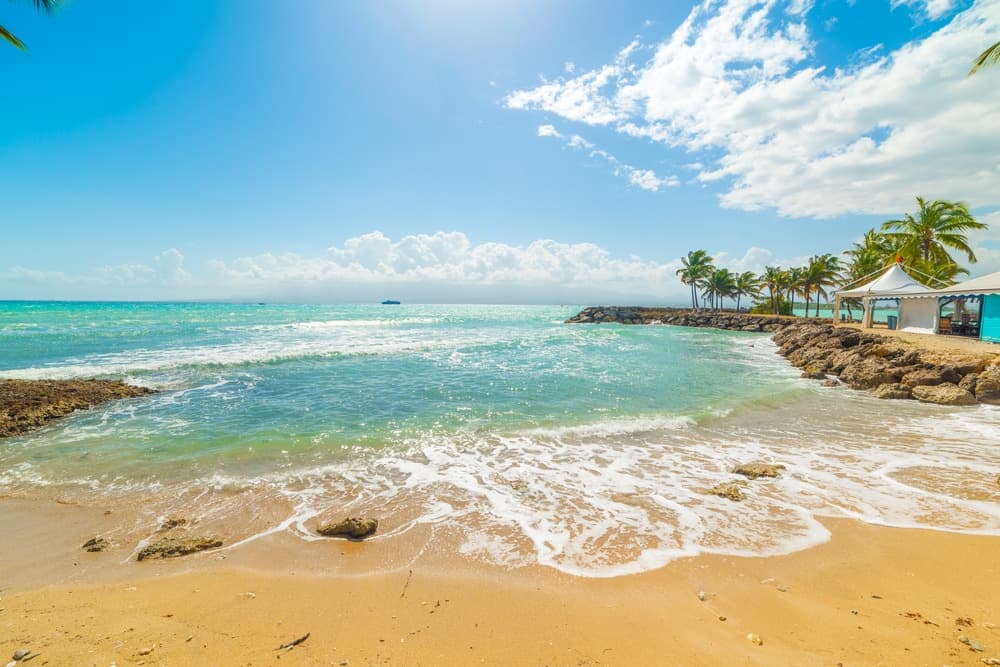
Bouilante boasts a richly indented coastline offering beaches with distinct atmospheres:
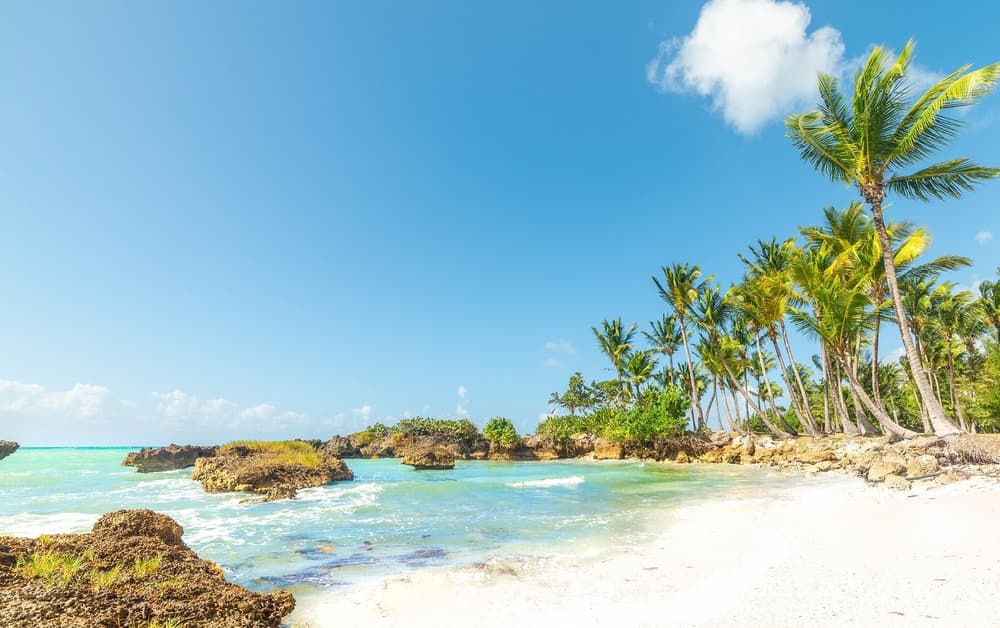
- Malendure Beach: celebrated for its black volcanic sand, coconut palms, and lively atmosphere. Ideal for swimming, lounging, or departing for the Pigeon Islets.
- Petite Anse: intimate, calm, and lined with light sand. Perfect for spotting fish and turtles in crystalline waters.
- Anse à la Barque: a wild and panoramic cove, it's the refuge for sea turtles during nesting season.
- Anse à Sable, Petit Malendure, or Anse de la Pointe des Tortues: more secluded beaches, ideal for swimming or contemplation.
Observe cetaceans offshore
From January to April, Bouilante becomes a prime cetacean-watching destination. Numerous sea excursions allow you to encounter dolphins, humpback whales, pilot whales, or sperm whales in respect of their natural habitat. This activity, guided by passionate professionals, appeals to both families and marine life enthusiasts.
Hike through tropical forest
Bouilante is an excellent starting point for nature hikes. You can follow:
- Trace des Crêtes, offering spectacular views over sea and forest.
- Trails of Guadeloupe National Park, leading to waterfalls, viewpoints, or the summit of La Soufrière volcano.
- Routes around the Mamelles, with circuits suited to all levels.
These itineraries traverse lush vegetation, allow observation of endemic species, and alternate physical exertion with peaceful immersion.
See wildlife at the Parc des Mamelles zoo
Located at Bouilante's edge, the Guadeloupe Zoo (Parc des Mamelles) sits within an exceptional tropical forest setting. Over 4 hectares, it houses over 400 animals: raccoons, iguanas, jaguars, ocelots, snakes, scorpions, parrots, bats, and more. A suspended walkway circuit allows you to discover this unique biodiversity in a fun, family-friendly way.
Discover culture and heritage
Bouilante possesses discreet yet rich historical heritage, featuring colonial ruins and emblematic buildings:
- Saint-Louis Church, dating to the 18th century
- Former town hall, now Maison des Aînés
- Beauséjour Distillery and heritage agricultural estates, such as La Lise, Massieux, or Muscade
- Column commemorating the French Revolution's centenary (facing the town hall)
- Buildings designed by Ali Tur, architect of post-war reconstruction (post office, chapel)
- Musée Balen ka Souflé, dedicated to cetacean and sea turtle conservation.
A stroll through town reveals this heritage through Creole houses, shaded squares, and views over the sea.
Seek adventure in the great outdoors
Bouilante is also perfect for thrill-seekers:
- Canyoning in mountain rivers and gorges: rappelling, jumps, natural water slides
- Sea kayaking to the Pigeon Islets or through mangroves
- Offshore game fishing
- River swimming in natural pools.
All activities are supervised by local professionals following eco-responsible practices.
Visit nearby sites
Finally, Bouilante is well-positioned to explore the surroundings:
- Maison du Cacao in Pointe-Noire, for artisanal immersive chocolate tasting
- Botanical gardens, agro-tourism parks, and cultural trails of the Leeward Coast
- Turtle Center (observation during nesting season, June-July).
Bouilante is roughly 45 minutes by car from Pointe-à-Pitre airport. The most convenient way to get there and explore the region freely is by renting a car. For those who don't drive, reaching Bouilante is also possible by bus, taxi, or ferry depending on available services.
Three routes lead to the municipality:
- Route des Mamelles (D23), which crosses Guadeloupe National Park
- The northern coastal road, via Deshaies
- The southern coastal road, via Vieux-Habitants.