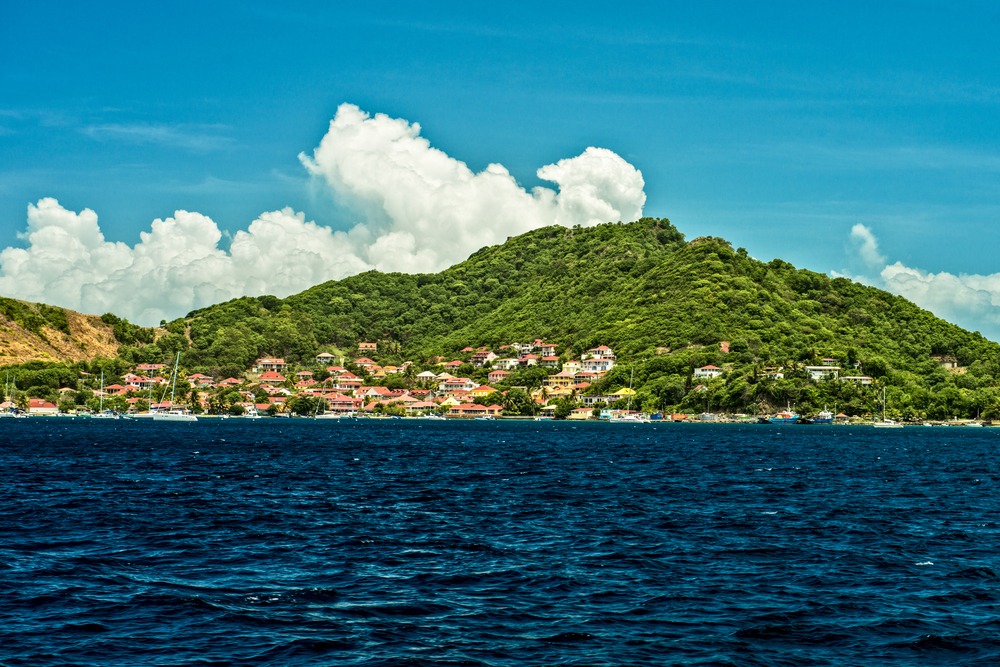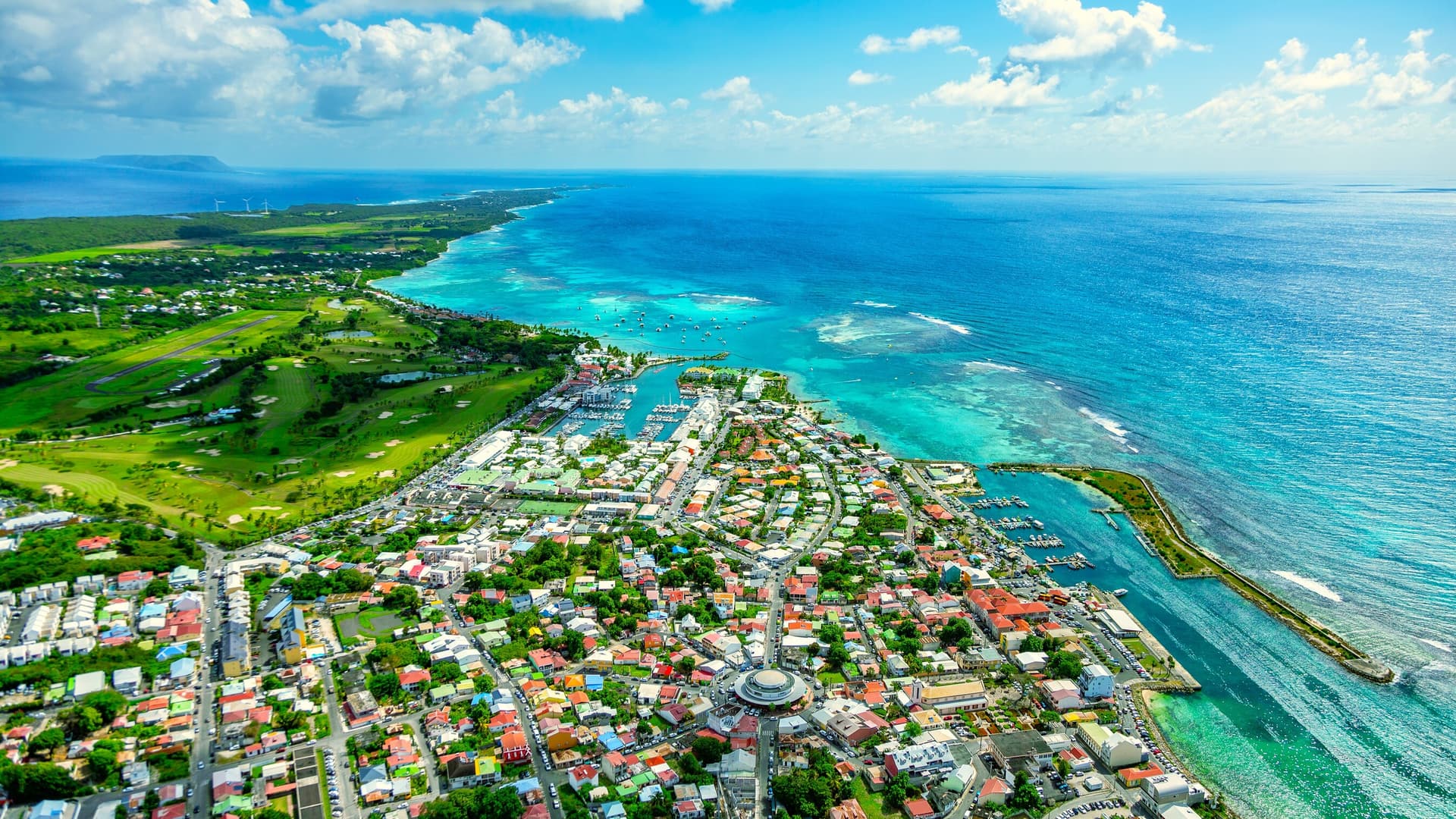
Grande-Terre
The limestone wing of Guadeloupe, drier and flatter, where the southern beaches, the Saint-François marina and the economic capital Pointe-à-Pitre are concentrated.
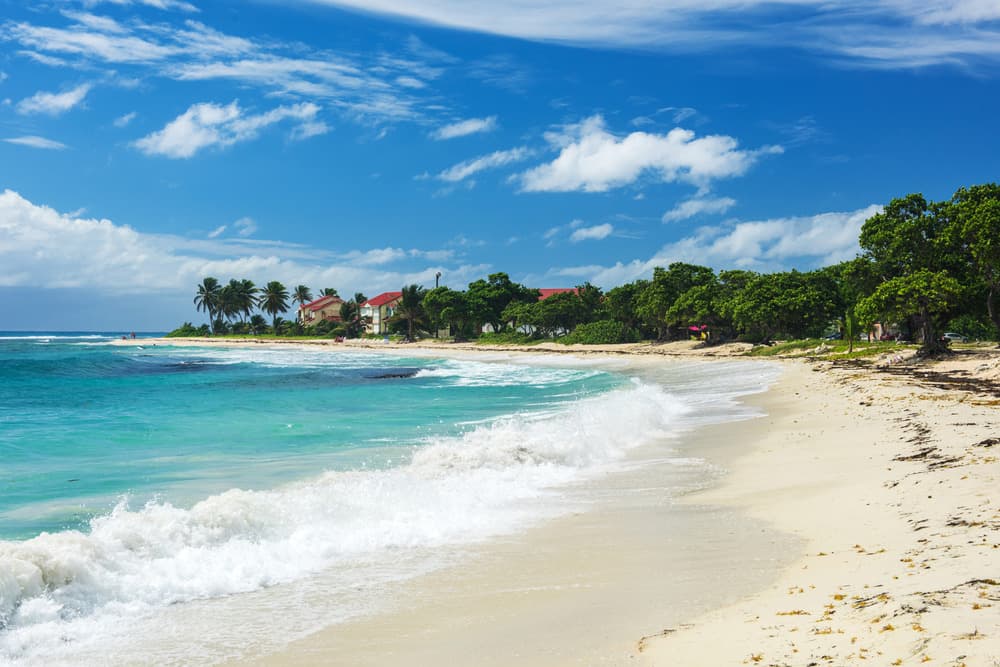
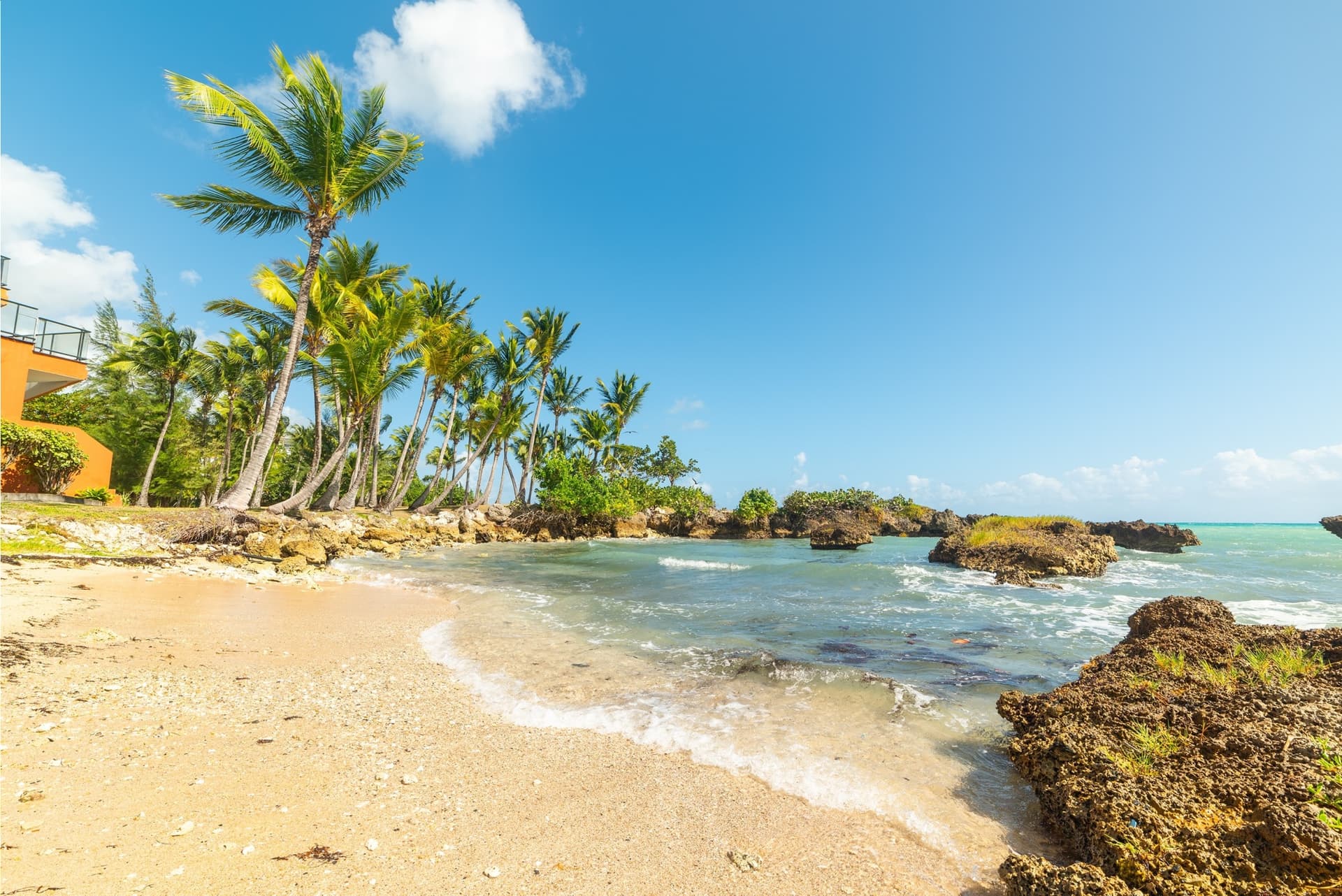
Grande-Terre forms the eastern wing of Guadeloupe, separated from Basse-Terre by a narrow strait of sea, the Rivière Salée, which the Gabarre bridge crosses at the entrance to Pointe-à-Pitre. Geologically, it is a low limestone plateau, rarely above 130 metres, which explains its drier climate and open landscapes: sugar cane fields, savannas, rounded hills. Nothing like the volcanic silhouette of its neighbour. This flatness is precisely what has shaped its economy and beaches, long stretches of white sand bordered by coral reefs.
Pointe-à-Pitre concentrates the archipelago's economic life. The Saint-Antoine market, under its 1870 metal halls, sells cinnamon sticks, fresh turmeric, prepared colombo spice blends, vegetarian peppers. A few streets away, Mémorial ACTe, opened in 2015 on the ruins of the former Darboussier sugar factory, offers a dense museum route through the slave trade and slavery in the Caribbean. Allow three hours to visit it properly. The city is best explored on foot in the morning, before the heat sets in, starting from Place de la Victoire and its century-old sandalwood trees.
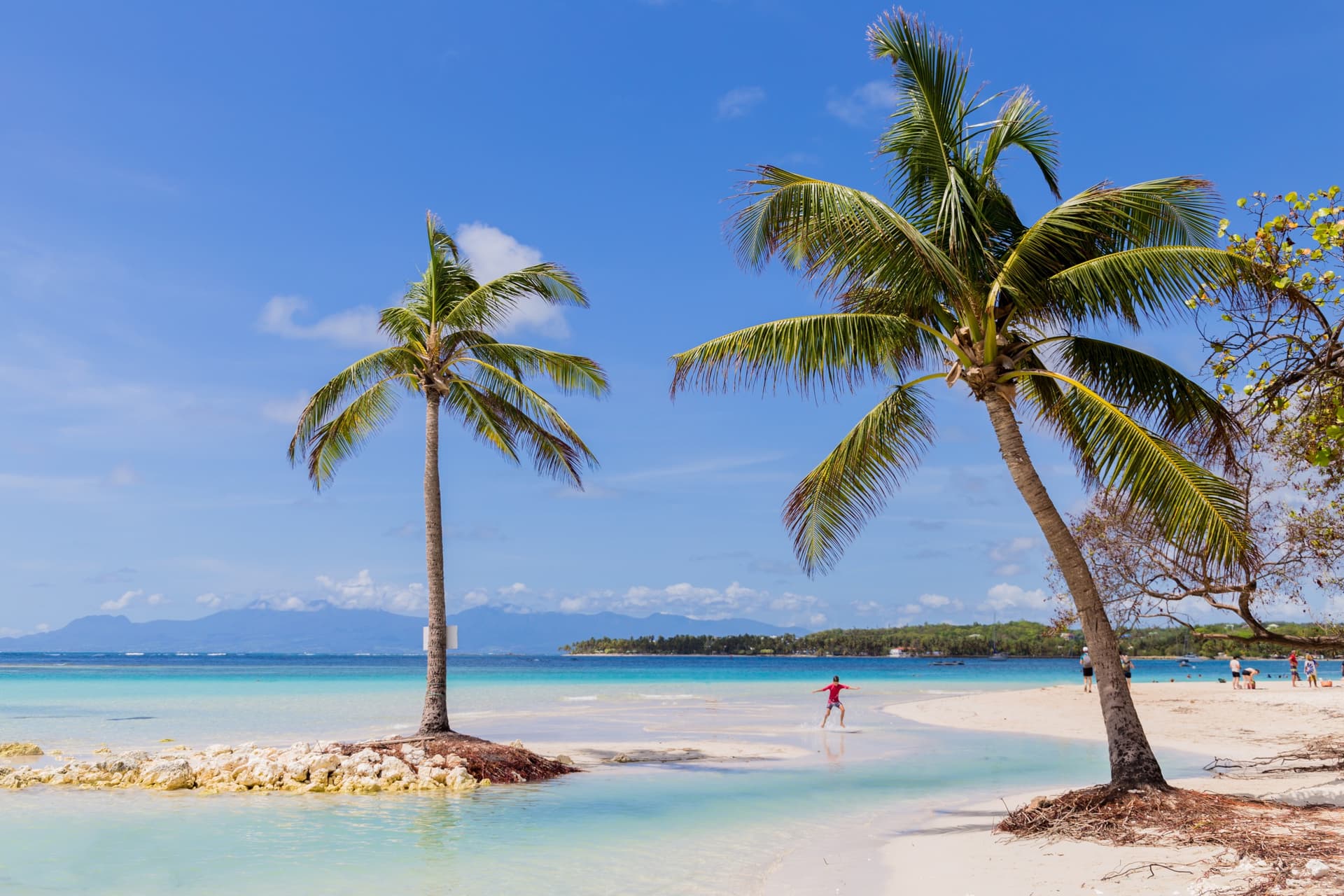
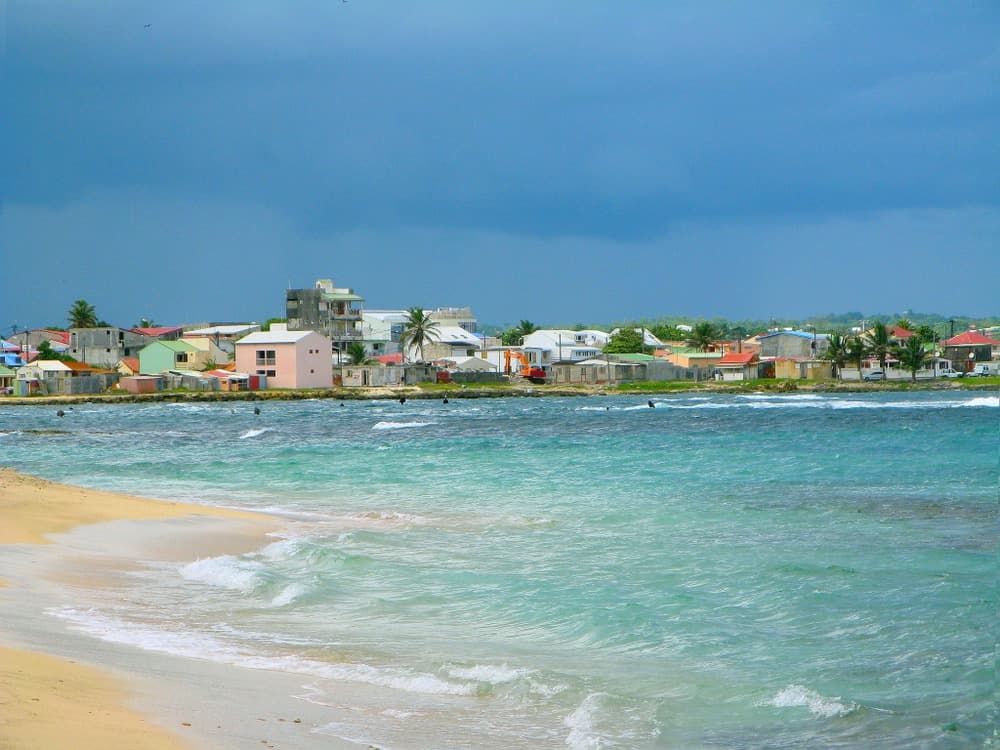
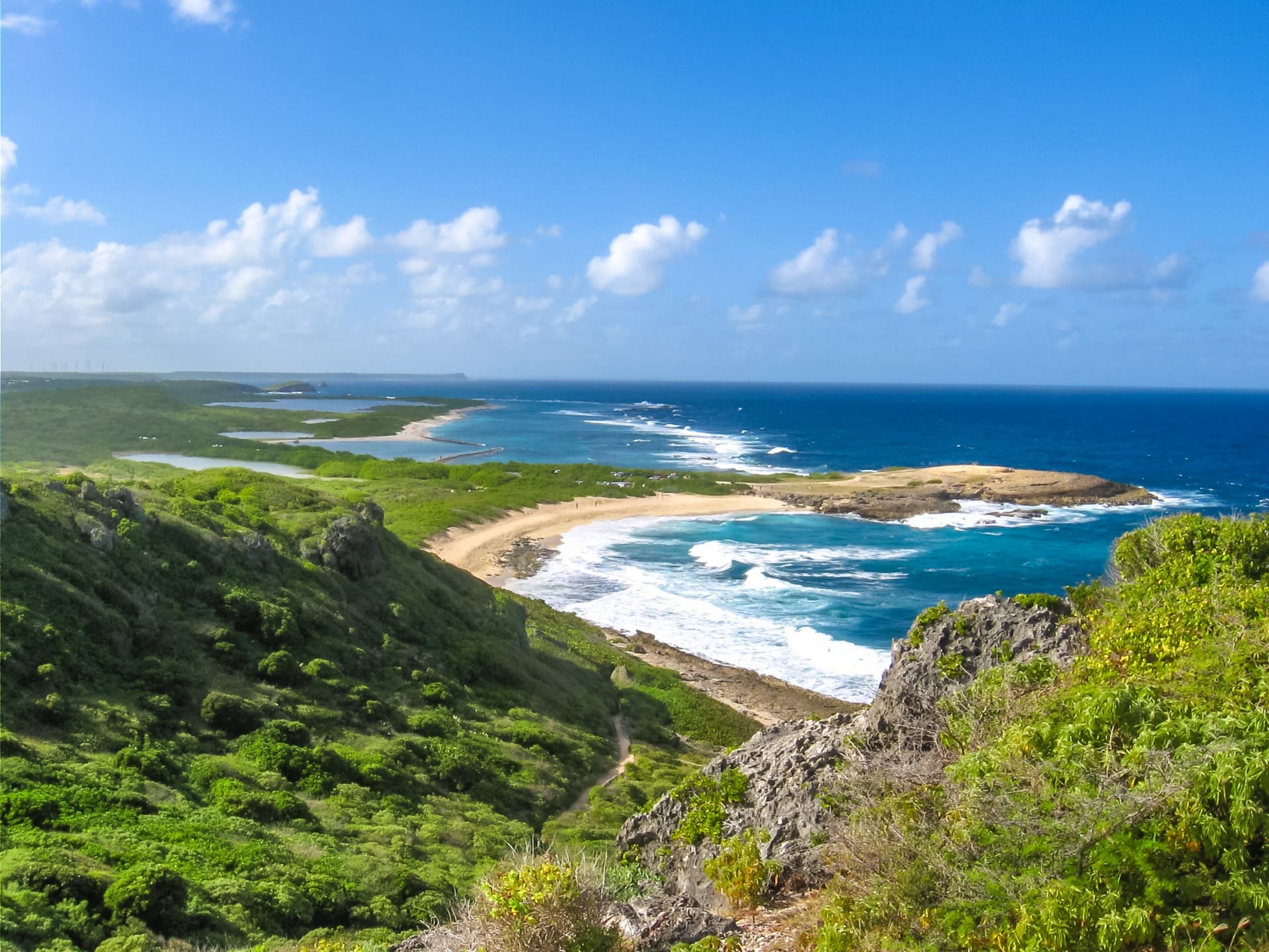
Heading east, the southern coast unfolds a sequence of the island's most frequented beaches. Le Gosier serves as a beach resort extension for the metropolitan area. Sainte-Anne, a former fishing village, revolves around its Caravelle beach and the Bois Jolan lagoon, protected by a coral barrier 300 metres offshore, perfect for children as the depth never exceeds 1.50 metres. Saint-François, further east, switched to marina tourism in the 1980s: ferry departures for La Désirade, Marie-Galante and Les Saintes, waterfront restaurants, international golf course. It's also the departure point for Pointe des Châteaux, a limestone spit battered by Atlantic swell that ends the island with a stone cross planted in 1951. On clear days, you can see La Désirade 10 kilometres offshore.
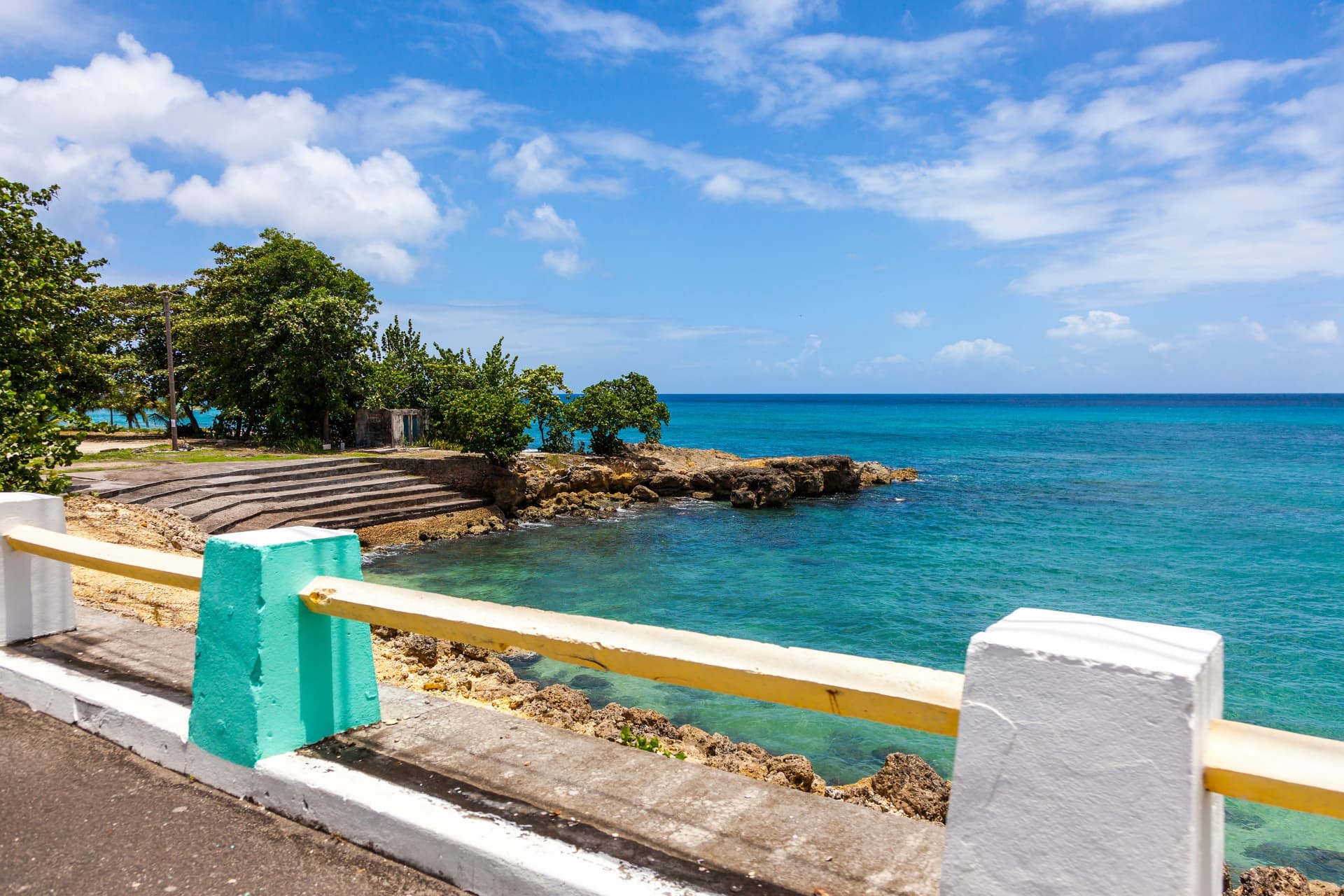
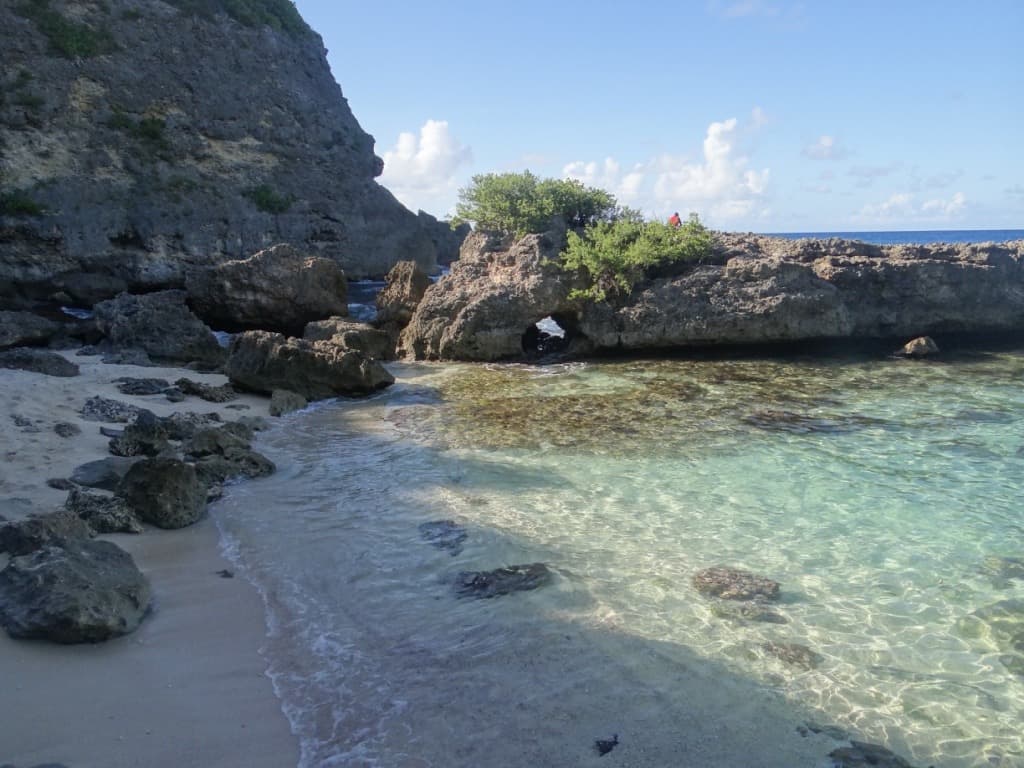
The northern coast, known as Grand Cul-de-Sac marin on its western side and Atlantic coastline for the rest, changes register entirely. The limestone cliffs of Porte d'Enfer and Trou de Madame Coco plunge vertically, and the road winds between sugar cane fields and dry woodland. Anse-Bertrand, Port-Louis with its Souffleur beach, Le Moule with its surf and kitesurfing spots on Autre Bord beach: you'll encounter far fewer crowds here than in the south. Le Moule was the island's first colonial port in the 18th century and retains its seaside cemetery facing the Atlantic.
The interior, which is often rushed through, deserves a detour. Les Grands Fonds, a maze of limestone hills covered with subsistence crops, harbours descendants of the Blancs-Matignon, a community settled there since the 19th century. Damoiseau distillery in Le Moule, founded in 1942, is the last active distillery in Grande-Terre: free visits to the warehouses and tastings of agricultural rum, the base of the local ti-punch. Culture thrives here, from gwoka, drum music inscribed on UNESCO's list in 2014, to patron saint celebrations running from August to October.
The climate differs markedly from Basse-Terre. The trade winds blow almost year-round from the northeast, maintaining a pleasant coolness even when the thermometer reads 30°C. Annual rainfall caps around 1,200 mm compared to 4,000 mm on the heights of La Soufrière. This explains the sparse vegetation, sugar cane rather than bananas, and the historical seaside vocation of this half of the island.
Must-see
Pointe des Châteaux and its limestone isthmus. An hour's walk there and back along the island's final ridge to the summit cross, with views of La Désirade and cliffs battered by the Atlantic. Prefer mornings before 10am to avoid the strong afternoon winds.
The Bois Jolan lagoon in Sainte-Anne. A still-preserved beach away from large hotels, protected by a reef in shallow water. Crystal-clear water, fine sand, sea grape trees along the shore for shade. Ideal with young children.
Mémorial ACTe in Pointe-à-Pitre. A 1,700 m² museum route through the history of slavery and the Caribbean slave trade, set on the ruins of the Darboussier sugar factory. Essential for understanding contemporary Guadeloupean society.
Damoiseau distillery in Le Moule. The last active distillery in Grande-Terre, producing AOC agricultural rum since 1942. Free visits to facilities in the heart of cane-cutting country, February to June during the harvest season.
Porte d'Enfer and Trou de Madame Coco. A narrow cove framed by 30-metre limestone cliffs on the north coast. A 45-minute walk leads to the Trou de Madame Coco sinkhole; exercise caution during heavy swell.
When to visit
The best period runs from December to April, the Caribbean dry season: brief showers, temperatures between 24 and 29°C, sea generally well-suited for swimming in the south. March and April offer the best balance between visitor numbers and weather. From July to October is hurricane season, with a statistical peak in August and September. Without reaching cyclone territory, rain episodes grow longer and the sea frequently fills with sargassum seaweed along the northern and eastern Atlantic coast, particularly around Le Moule and Saint-François.
Due to its constant trade winds and flat relief, Grande-Terre remains notably drier than Basse-Terre year-round. You can have clear blue skies while it rains over La Soufrière 30 kilometres away. Kitesurfing enthusiasts favour January to March, when trade winds blow most consistently between 15 and 25 knots over spots at Saint-François and Sainte-Anne Bay.
Practical advice
Allow a minimum of 4 days to explore Grande-Terre without rushing: 1 day for Pointe-à-Pitre and Mémorial ACTe, 1 to 2 days on the southern beaches between Sainte-Anne, Saint-François and Pointe des Châteaux, 1 day for the wilder northern coast from Port-Louis to Porte d'Enfer. Pôle Caraïbes international airport is located in Abymes, 10 minutes from Pointe-à-Pitre, making Grande-Terre the logical entry point for any Guadeloupe stay. The road network is good, distances short: 35 kilometres maximum between main sites.
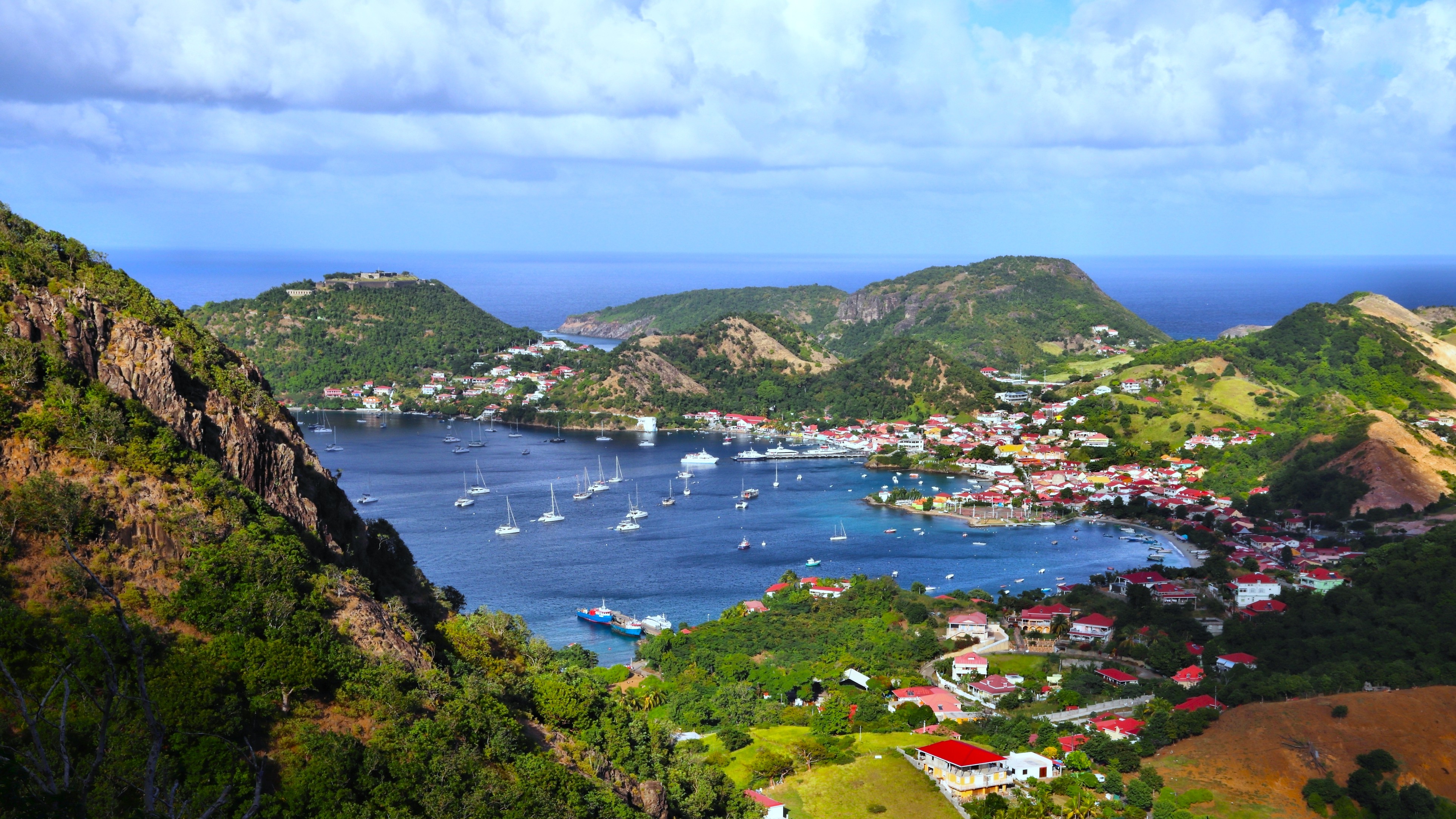
The region connects naturally with Basse-Terre for hiking and tropical forest (Gabarre bridge, 1 hour's drive to Carbet waterfalls), and serves as a logistics base for the Southern Islands: daily shuttles from Saint-François or Pointe-à-Pitre to Marie-Galante (1 hour), Les Saintes (1 hour) and La Désirade (45 minutes). For a first stay of 10 to 14 days, our English-speaking team recommends combining 4 days in Grande-Terre, 4 days in Basse-Terre and 3 days on one of the Southern Islands. Grande-Terre suits families seeking safe beaches particularly well, travellers in search of good-quality hotel comfort, and water sports enthusiasts.