Basse-Terre
Basse-Terre
Active volcano, tropical jungle, protected marine areas and Creole towns: Basse-Terre is the wild wing of the Guadeloupe butterfly. Our complete guide.
An essential destination in the Guadeloupe archipelago, the island of Basse-Terre brings together a wealth of natural, historical and cultural riches that promise to enhance your vacation in the Lesser Antilles. With its mountainous massif, this destination offers a transformative journey through lush tropical vegetation and thrilling adventures, especially for nature lovers. Hiking, canyoning, diving, beaches and waterfalls await you at Basse-Terre, not to mention the national park and botanical garden in the area. Discover more about what could make your stay at Basse-Terre truly unforgettable.
Basse-Terre in a Nutshell
If Guadeloupe is nicknamed "the butterfly island," Basse-Terre, located in its western part, is called "the island of beautiful waters," or "Karukera" in Carib. This volcanic and mountainous French island covers an area of 848 km² and had a population of 186,661 inhabitants in 2006. Corresponding to the arrondissement of Basse-Terre, this destination is home to the city of Basse-Terre in its southwestern part, the administrative capital of Guadeloupe and the main town of the island of Basse-Terre. The name "Basse-Terre" is therefore shared between the island, its arrondissement and its main town. An important note: the city of Basse-Terre has been classified a City of Art and History since 1995.
Located in the Caribbean Sea, the island of Basse-Terre boasts its geographical location as well as its mountainous and submarine relief, offering a wealth of impressive sights. These factors are indeed the source of its tourist attractions (beaches, lagoons, waterfalls, park and garden) making it a must-visit destination for a trip to Guadeloupe. They also invite you to lose yourself in entertaining tourist activities such as beach swimming, diving, hiking to the famous waterfalls, and more.
You have every reason to visit Basse-Terre, as it is the largest of the islands making up the Guadeloupe archipelago. The mountainous center of the island is home to the Guadeloupe National Park, one of France's national parks and renowned for its natural wealth.
What to See in Basse-Terre?
Natural Heritage
The Guadeloupe National Park
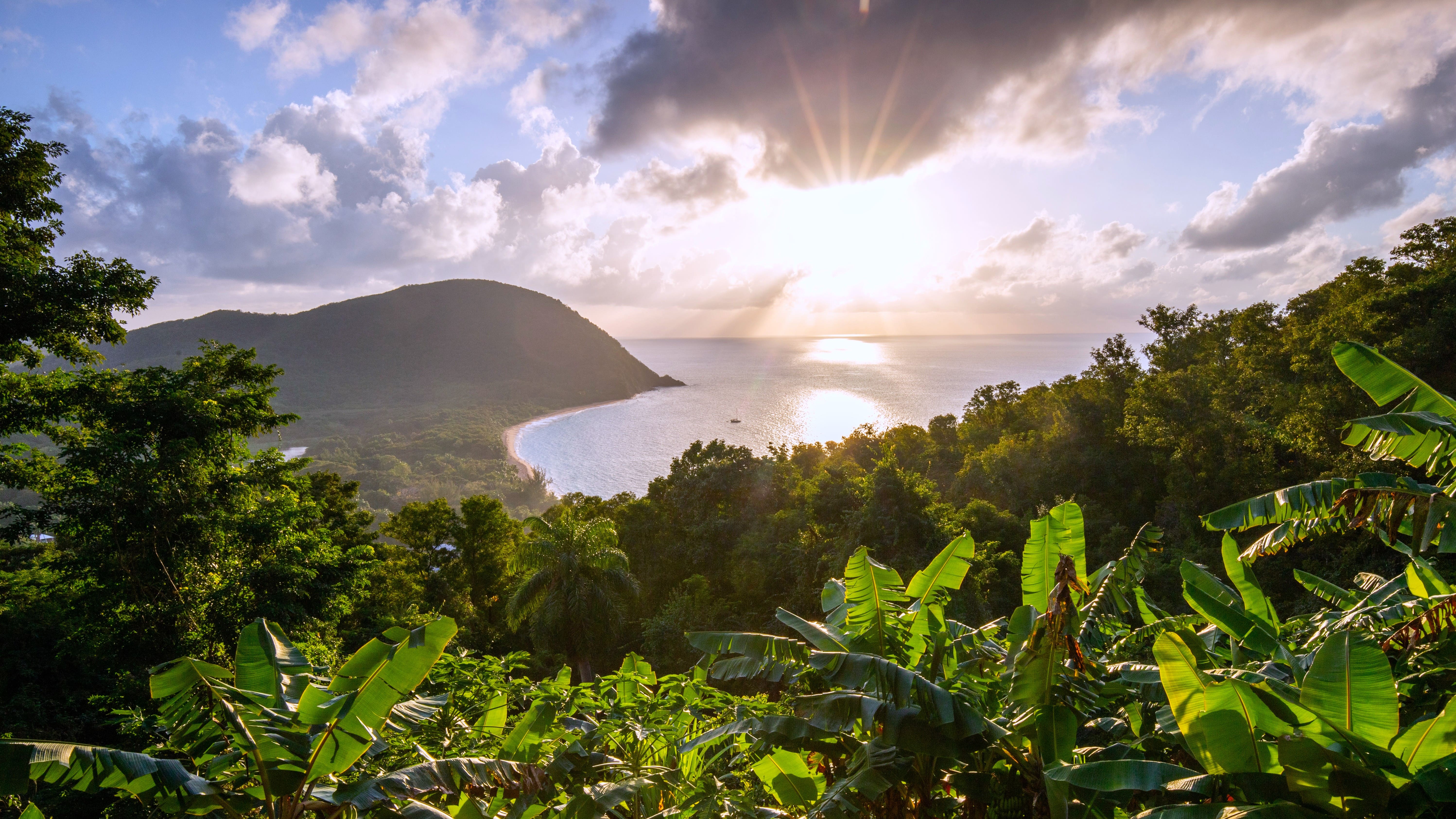
Its high rate of island endemism as well as its rich fauna and flora are its distinguishing features. The Guadeloupe National Park extends to the northwest over virtually the entire Basse-Terre, protecting a biodiversity hotspot in the Caribbean islands. Essential to this destination, it encompasses many of Basse-Terre's curiosities within itself.
- La Soufrière: the highest peak in the Lesser Antilles is located in the south of Basse-Terre. Rising to 1,467 m elevation, this volcano dominates the landscape of "the island of beautiful waters." La Soufrière offers magnificent panoramic views of Guadeloupe and neighboring islands.
- The Carbet Waterfalls: these are the most well-known waterfalls in the region. Located near Capesterre-Belle-Eau, these three famous cascades succeed one another and offer several hiking options. The highest waterfall reaches 115 m high.
- Les Deux Mamelles: these are two magnificent peaks named: Pigeon Peak or Déboulé (768 m) and Petit-Bourg Peak (716 m).
Parc des Mamelles
Nestled in the heart of Guadeloupe National Park, this park has an amusing name for a zoo. A visit to this site should be included without question in a family vacation program in Guadeloupe. Housing approximately 85 species from Guadeloupe, the Caribbean and French Guiana, this zoological park will surely delight your children. Nothing quite like a walk through lush vegetation to observe the Ti-Raccoon, the mongoose or the iguana as well as exotic species like the jaguar and the red panda. An incredible tropical Noah's ark for modern times, this zoo meets the criteria of EAZA, a European quality label. It would be regrettable not to visit it during your stay at Basse-Terre.
The Deshaies Botanical Garden
Let yourself be intoxicated by the tropical scents of the Deshaies botanical garden during a stroll through magnificent lush vegetation. This site is also recommended for families: it offers a fascinating, life-size lesson in tropical botany, especially for your children. Hummingbirds and colorful small parrots attracted by the garden's flora add to the enchanting colors of this fabulous corner of the Antilles.
To give you more choices among the natural sites to visit at Basse-Terre, we would also mention Île Caret in the famous Grand Cul-de-Sac marin, the Cascade aux Écrevisses, not to mention the charming Creole villages in the surrounding area (Sainte-Rose, Vieux-Fort, etc.).
Cultural and Historical Heritage
Allée Dumanoir, in Capesterre-Belle-Eau
This superb straight road is lined with royal palms planted in the mid-19th century. Stretching 1 km long, Allée Dumanoir leads to the Domaine Marquisat de Brinon. The location offers an ideal setting for taking souvenir photos.
Heritage in the City of Basse-Terre
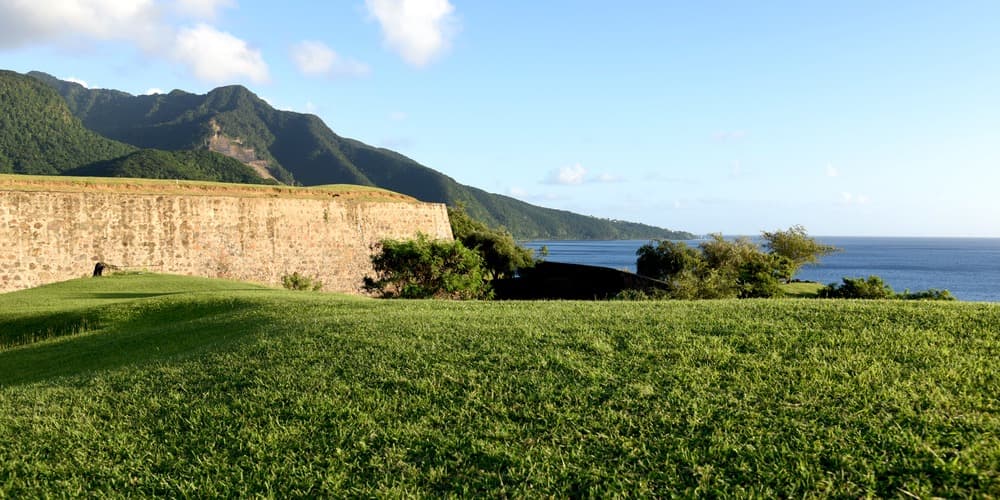
Let's recall that the island of Basse-Terre comprises 16 towns. Beyond the city of Basse-Terre, the main town, we would also mention Baie-Mahault, Saint-Claude, Gourbeyre, Baillif, among others. To enhance your stay on the island, we propose visiting important monuments in Basse-Terre. Fort Delgrès and the Notre-Dame-de-Guadeloupe Cathedral are prime examples.
Buildings in Petit-Bourg
Architecture enthusiasts will find great pleasure here. The town of Petit-Bourg seduces with its numerous buildings by Ali Tur, a French architect of Tunisian origin, commissioned for the reconstruction of public buildings.
What to Do in Basse-Terre?
Climbing La Grande Soufrière
A genuine challenge for avid hikers, the Soufrière volcano (1,467 m) is one of the most popular Guadeloupe sites among travelers. Located in the south of Basse-Terre, it offers different hiking possibilities, with an ascent of 1 hour 45 minutes to the summit being the most recommended.
At the Bains Jaunes, at 950 m elevation, a natural spa, a true place of relaxation awaits you offering warm water baths (at 30°C) fed directly by thermal springs from the volcano.
Swimming and Diving
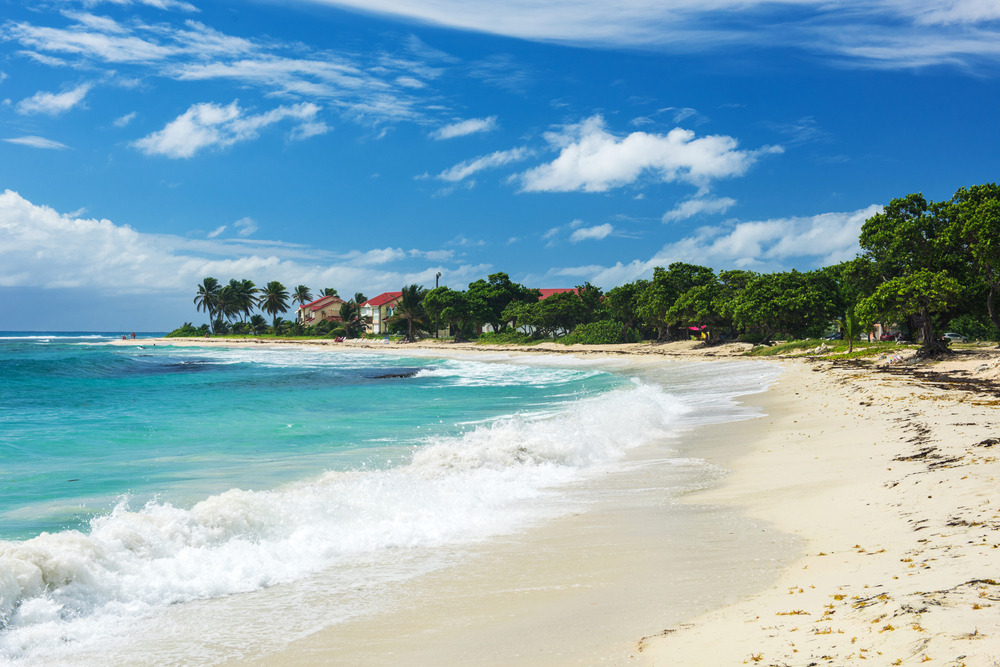
Grande-Anse located in Deshaies is the most famous and one of the most beautiful beaches in Guadeloupe. In the same town you will also find La Perle, offering magnificent sunsets among the palm trees. There is also another Grande-Anse in Trois-Rivières boasting its superb natural setting thanks to black sand, tall palm and coconut trees as well as the surrounding mountains.
To go diving at Basse-Terre, the black sand beach of Malendure located in the municipality of Bouillante is the ideal spot. This marine natural reserve, integrated into the Guadeloupe National Park is composed of the Pigeon islets, highly appreciated by divers for the diversity of their underwater fauna and flora. Moreover, the location has 1,000 ha of underwater beds rich in some coral but especially multicolored fish and sea turtles.
Malendure is full of diving clubs for initiation sessions with an instructor and equipment rental. Les Heures Saines, on the Malendure rock, is one of the oldest and most reputable clubs. To access the site, you must cross the sea to the islets by boat.
Taking the Route de la Traversée
Discover the richness of the Guadeloupe ecosystem by traveling along the Route de la Traversée approximately 25 km long. In addition to the fresh and lush landscapes along the route, it passes near several important sites. The Cascade aux Écrevisses and the Parc des Mamelles mentioned above are examples. We would also mention Saut de la Lézarde, the Maison de la Forêt (Guadeloupe National Park) and the Bras-David trail (secure immersion in the forest).
Want to discover this destination?
Our local advisors design your tailor-made trip.