Anse-Bertrand
Anse-Bertrand
At the northern tip of Grande-Terre, Anse-Bertrand combines spectacular cliffs, secluded beaches and preserved Creole heritage. Complete guide to planning your visit.
Nestled at the northern edge of Grande-Terre, Anse-Bertrand is an authentic and peaceful municipality in Guadeloupe. Far from the tourist bustle of major beach resorts, it captivates travelers seeking raw nature, breathtaking vistas and genuine encounters. This Creole village, facing the Atlantic Ocean, retains a rural and maritime character that makes it a true haven of tranquility.
Where is Anse-Bertrand Located?
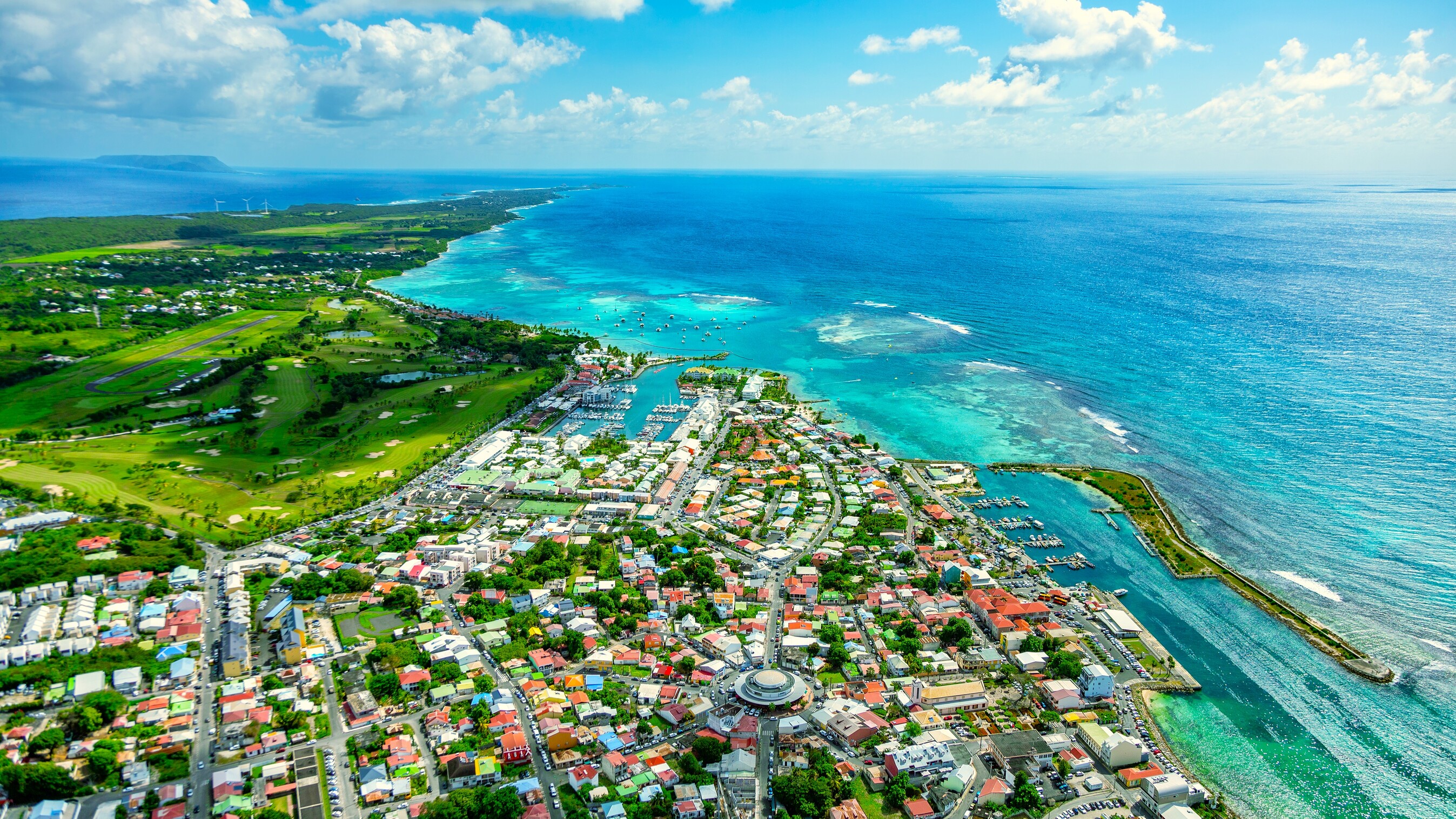
Anse-Bertrand, situated in the Lesser Antilles, occupies a strategic position at the northern tip of Grande-Terre. It spans approximately 62.5 km², between the Caribbean Sea to the west and the Atlantic Ocean to the east, offering a unique dual maritime character.
Bordering the municipalities of Port-Louis and Petit-Canal, Anse-Bertrand is nestled on the northwestern coast of Guadeloupe, approximately 35 km northeast of Pointe-à-Pitre. This seaside location grants it a spectacular coastline and ideal conditions for lovers of vast open spaces and water sports.
Climate
Anse-Bertrand enjoys a tropical climate typical of the eastern Caribbean, with high temperatures year-round, particularly pronounced during summer. Rainfall is moderate and fairly well distributed throughout the year, though a more humid season extends from July to November, coinciding with hurricane season. On average, the municipality receives less than 1,500 mm of rain annually.
Northeast trade winds regularly blow through, refreshing the atmosphere and tempering heat. To make the most of beaches and outdoor activities, the best time to visit Anse-Bertrand runs from December to May, during the dry season.
History
Once called "Anse de Bertrand," the municipality of Anse-Bertrand derives its name both from the shape of its coastline—an anse (cove)—and, according to tradition, from the first name of an early settler fisherman, Bertrand Patternait.
Long before European colonizers arrived, this northern Grande-Terre territory was inhabited since around 1500 BCE, as evidenced by the discovery of Meso-Amerindian artifacts. It also became the last refuge of the Carib Indians on this part of the island. In 1660, Governor Charles Houël officially ceded this arid region between Pointe de la Grande Vigie and Pointe des Châteaux to them, considered the least fertile area of the archipelago at the time.
Over the decades, the indigenous population declined: by 1730, only 76 Caribs remained, and by 1825, just 7 families survived. In 1882, a group of descendants submitted a final petition to authorities to reclaim their lands. This symbolic gesture marks the last official trace of Amerindian claims in the region.
Anse-Bertrand was long attached to Port-Louis, separating administratively only in 1737. This late separation reflects gradual colonization, hindered by poor soil quality. Yet colonists quickly introduced cash crops, notably cotton and sugarcane, supported by numerous agricultural infrastructure.
By 1790, the municipality already counted 12 cotton mills, 24 windmills and 21 sugar refineries. These towers, still visible today in surrounding countryside, recall the municipality's agricultural past, such as the La Mahaudière estate. This latter was the site of a famous 1840 trial: that of an enslaved woman accused of poisoning the master's wife, Douillard Mahaudière.
A place of memory, Anse-Bertrand preserves traces of its colonial and agricultural past in its landscape: mill ruins, estate remnants, and historically charged place names. Though official archives remain incomplete, local identity is built today on strong Creole heritage, transmitted by residents themselves. In 1998, the municipality was also a strategic observation point during the February 26 solar eclipse.
Anse-Bertrand Today
Anse-Bertrand's economy rests primarily on agriculture, with predominant sugarcane cultivation that has deeply shaped the local landscape between hills and cliffs. Remnants of this rich agricultural past remain visible through old windmills scattered across the territory, notably that of the former La Mahaudière estate, where a wind farm is now situated. Culinarily, the municipality showcases simple yet flavorful gastronomy, highlighting seafood and legumes.
Moreover, Anse-Bertrand boasts notable cultural and sports facilities, including the Saint-Jacques hippodrome—Guadeloupe's only one—which serves as a gathering center, and the Lilian Thuram municipal stadium. These infrastructures host several local clubs such as Union Sportive Ansoise (football), Union Vélocipédique du Nord (cycling), as well as participants in the Trace du Grand Cul-de-Sac Marin, an emblematic sporting event in northern Guadeloupe.
What to See and Do in Anse-Bertrand?
Paradisiacal Beaches and Secret Coves
Anse-Bertrand boasts beaches with varied charm:
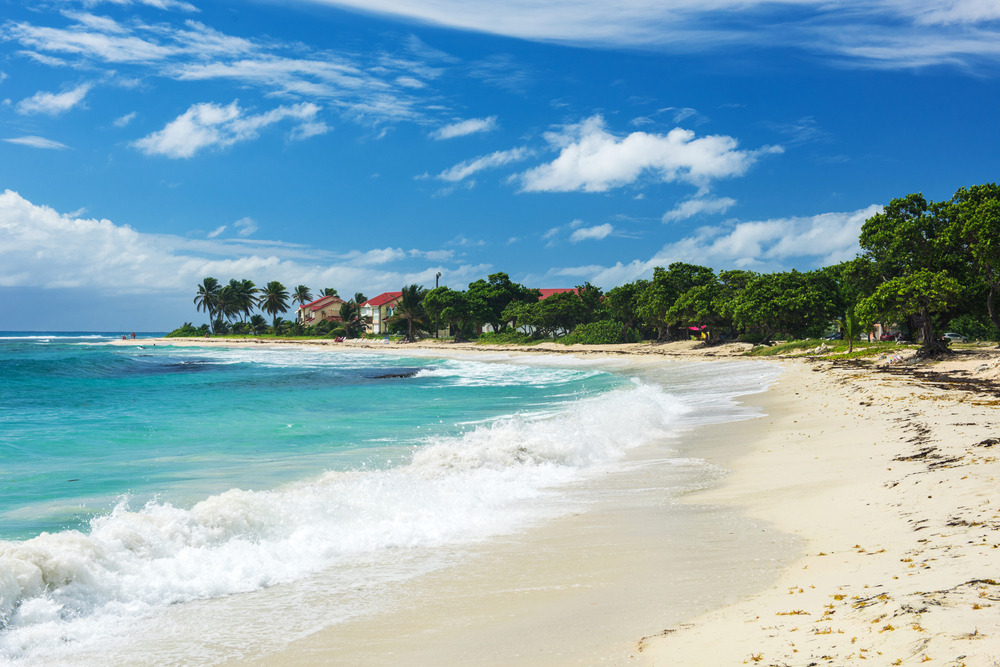
- Chapelle Beach, bordered by coconut palms and protected by a coral barrier, is prized for swimming, surfing and picnics.
- Anse Laborde, wilder in nature, appeals through its tranquility and steep landscapes, though swimming can sometimes be risky.
- Porte de l'Enfer Beach, nestled between towering cliffs, offers a unique atmosphere blending beauty and mystery.
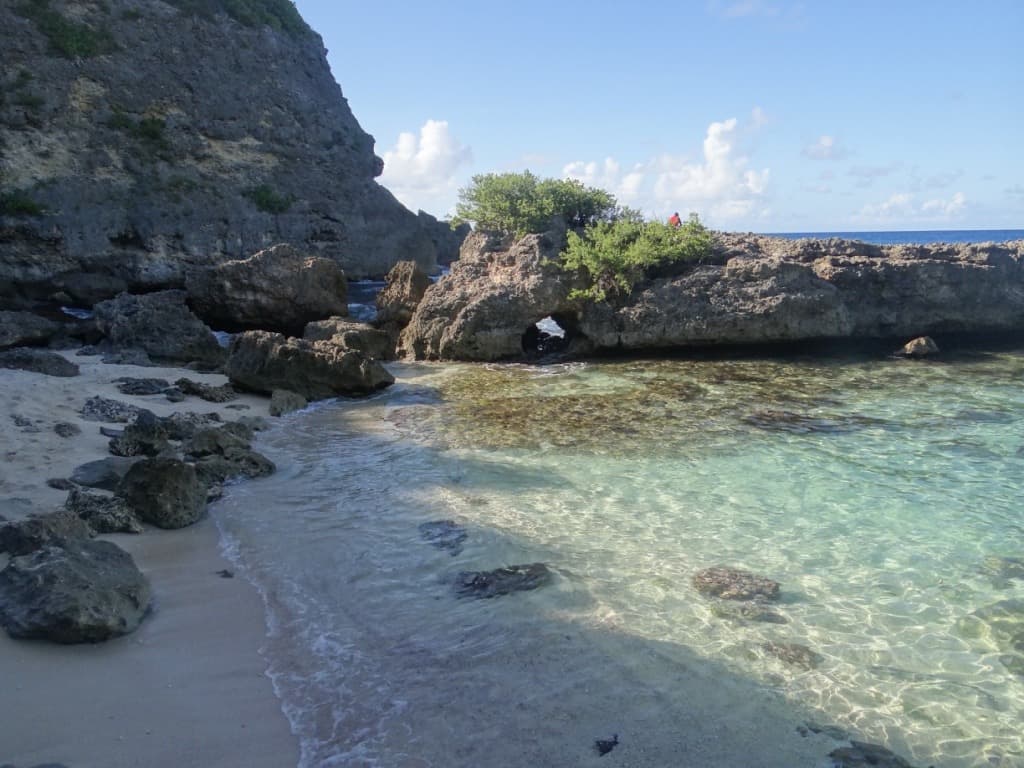
Other gems dot the coastline: Anse Colas, Anse Pistolet, and Trou à Man Loui, considered Guadeloupe's smallest beach.
Spectacular Cliffs and Maritime Vistas
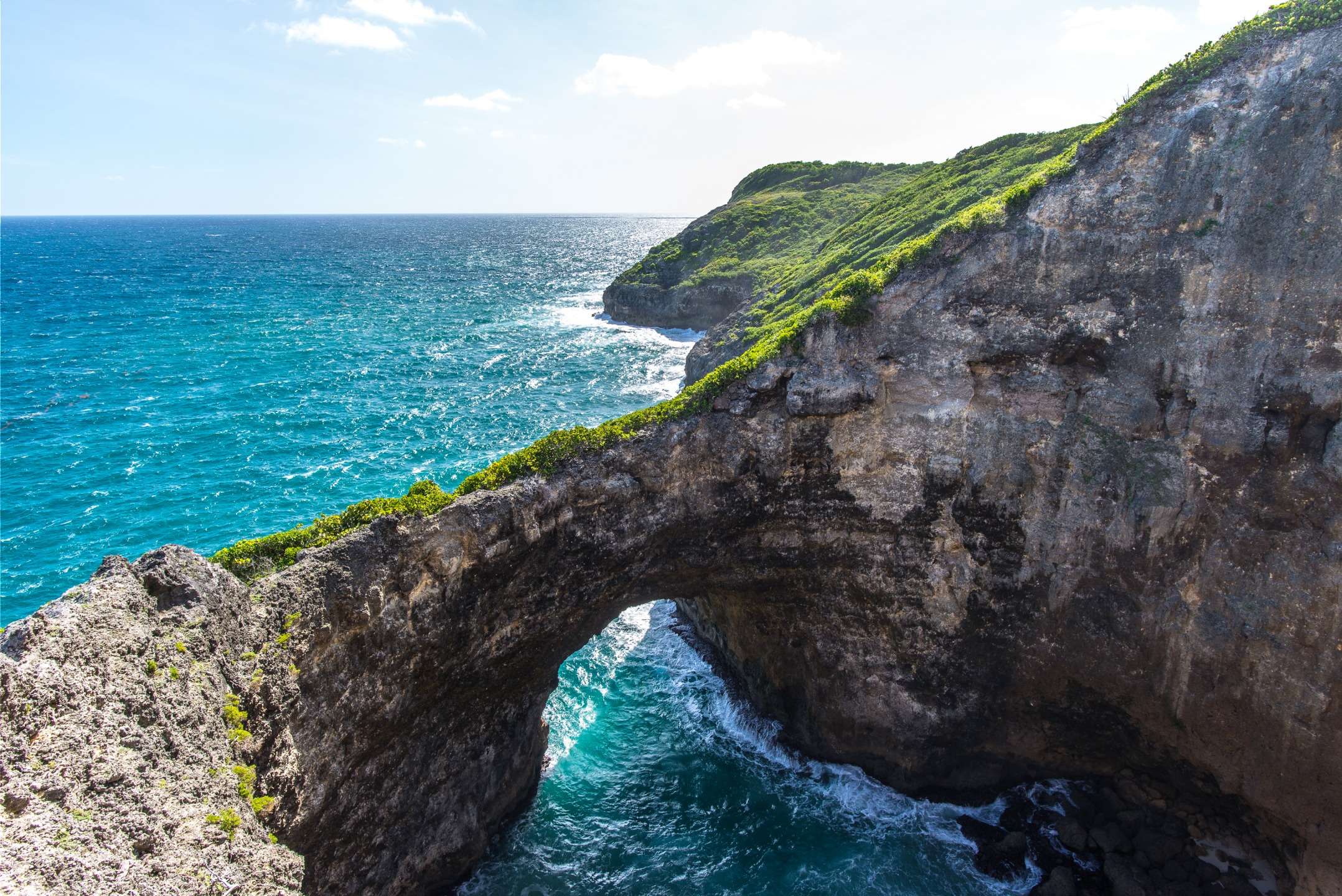
North of the municipality, Pointe de la Grande Vigie dominates the Atlantic from its 80-meter-high limestone cliffs. This spectacular promontory offers, in clear weather, unobstructed views of nearby islands: La Désirade, Antigua and Montserrat. Nearby, Porte d'Enfer is a sea passage nestled between cliffs, celebrated for its wild landscapes and the Trace des Falaises hike, a 12 km coastal route. Several trails also connect Anse Laborde to Porte d'Enfer, alternating breathtaking views with points of natural interest like Trou de Madame Coco, a mythic grotto laden with local legends.
Natural Heritage and Hidden Treasures
Anse-Bertrand harbors places still little known to the general public. The Anse Castalia grotto, sculpted by waves into the cliff face, fascinates through its mineral décor and turquoise hues. Further on, the Ravine Sable ornithological site, developed near the fishing port, is a haven for local birdlife, with an observation tower, educational trails and explanatory panels. This peaceful place allows observation of moorhens, egrets and American coots.
Other Points of Interest and Sites to Discover
Anse-Bertrand's past reads through its landscapes: 17 windmills, including that of Beaufond, still dot the municipality, witnessing its sugar and slavery history. Once a Carib refuge, the territory was progressively colonized in the 18th century. The authentic borough, free from tourism excess, preserves traditional houses ventilated and well-adapted to the tropical climate. Saint-Denis Church, rebuilt after earthquakes and several hurricanes, presides over the village. Nearby, the former prison, once used as a slave dungeon, still stands.
Sports and Water Activities
A destination favored by outdoor enthusiasts, Anse-Bertrand offers surfing, kitesurfing, jet-skiing, kayaking and snorkeling along its shores. The Chapelle surf spot ranks among Grande-Terre's most renowned, with hollow waves reserved for experienced riders. Horseback riding and hikes such as that of Pointe Mancenillier round out possibilities. The Saint-Jacques racecourse, Guadeloupe's only hippodrome, also animates the municipality with equestrian events.
Local Life and Cultural Events
Anse-Bertrand is rhythmed by its festivals and traditions. Gwo Ka festival, Easter celebrations on beaches, Carnival, and Peas Day all testify to vibrant culture. The Guadeloupe Cycling Tour passes through the municipality each year, drawing crowds. Local markets offer fresh produce, tropical fruits and spices, while Creole gastronomy expresses itself in seaside restaurants: accras, colombo, lobsters, coconut flan and local rums.
To reach Anse-Bertrand from Pointe-à-Pitre, several options await you. The most economical involves taking a local bus connecting Grande-Terre's main municipalities, though schedules can be irregular. You may also opt for a taxi or car rental. The journey takes about 45 minutes from Pointe-à-Pitre, crossing beautiful landscapes typical of northern Guadeloupe.
Want to discover this destination?
Our local advisors design your tailor-made trip.